Summary:
You’ve got land that needs clearing. Maybe it’s a backyard that’s been slowly swallowed by brush, a lot you’re prepping for construction, or storm debris that turned into a full-scale overgrowth problem. Whatever brought you here, you’re probably realizing that “land clearing” isn’t one thing — it’s a category, and the method you choose matters more than most people expect.
Forestry mulching has been gaining real traction across Nassau County, and for good reason. But it’s not always the right call. This page breaks down both approaches honestly — how they work, what they cost, and which one makes sense for your property specifically.
Land Clearing Methods: Forestry Mulching vs. Traditional Approaches
Traditional land clearing is what most people picture: bulldozers pushing through vegetation, excavators pulling stumps, haul trucks carting everything off to a disposal site. It works, and for certain projects — particularly those requiring significant grading or foundation prep — it’s still the right tool. But it’s a multi-machine, multi-day process that leaves the ground bare, compacted, and vulnerable.
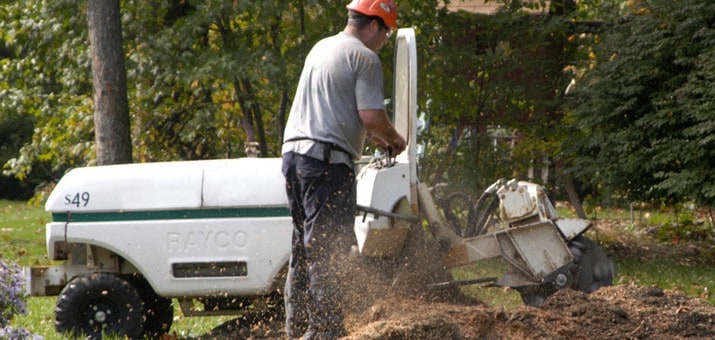
Forestry mulching takes a different approach entirely. One machine moves through the site, cutting and grinding vegetation simultaneously, leaving a layer of organic mulch in place of what was there. No hauling, no burning, no separate stump crew. The site looks dramatically different by the end of the day, and the soil underneath is in far better shape than it would be after a bulldozer pass.
How Does Forestry Mulching Actually Work?
A forestry mulcher is a specialized piece of equipment — typically a skid steer or tracked machine fitted with a rotating drum of hardened steel teeth. It moves through brush, saplings, and small to mid-size trees, shredding everything down to ground level in a single pass. The material doesn’t go anywhere. It’s processed right where it stood and spread across the cleared area as a layer of wood chip mulch.
That mulch layer is doing real work. It holds moisture, suppresses weed regrowth, and — critically for Nassau County’s sandy loam soils — prevents the kind of erosion that leaves you with a muddy, rutted mess after the first rainstorm. The adequate mulch coverage can reduce runoff by roughly 50% and soil loss by up to 80% compared to bare cleared ground. On properties near waterways, drainage channels, or sloped terrain, that’s not a minor footnote — it’s a significant practical advantage.
The other thing forestry mulching does well is selectivity. A skilled operator can clear invasive brush and unwanted growth while leaving healthy oaks, maples, and ornamentals exactly where they are. That kind of precision is simply not possible with a bulldozer. If you’ve got mature shade trees that define your backyard and you want to clear around them — not through them — forestry mulching is the method that makes that possible.
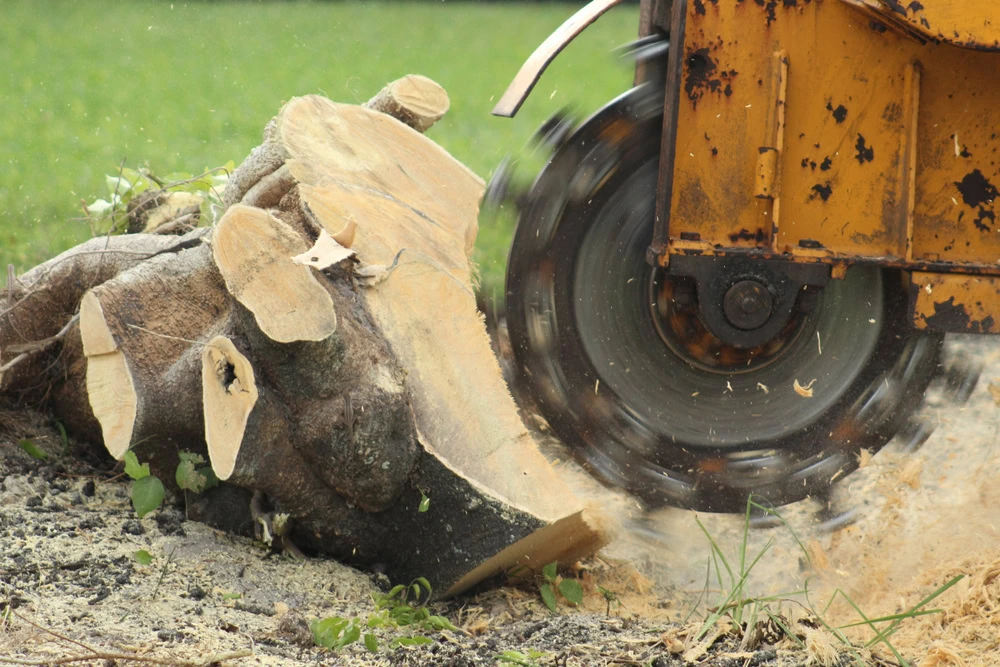
One question that comes up often: does forestry mulching handle stumps? The answer is partially. The machine grinds above-ground and near-surface material effectively, but stumps requiring below-grade removal need dedicated stump grinding as a follow-up step. We offer both services, so that’s never a gap in the process.
Brush Clearing for Nassau County's Invasive Species Problem
If you’ve owned property in Nassau County for more than a few years, you’ve probably watched invasive species take over corners of your yard faster than you can manage them. Oriental bittersweet, Japanese knotweed, multiflora rose, phragmites — these aren’t just aggressive, they’re persistent. Pull them by hand and they’re back in a season. Spray them and you’re managing a chemical treatment program, not solving the problem.
Forestry mulching is one of the more effective mechanical tools for large-scale invasive brush clearing because it disrupts root systems at a depth that surface-level treatment can’t reliably reach. It won’t eliminate every invasive species in a single pass — particularly with something as tenacious as knotweed — but it sets the site back significantly and gives you a real starting point for follow-up management or replanting.
The Cornell Cooperative Extension Nassau County has active invasive species programs that local landowners can reference for guidance on what’s spreading in specific areas of the county. But once you’re past the education phase and need the vegetation physically gone, mechanical clearing is where the conversation starts. For properties where invasives have overtaken large areas — something we see regularly in Oyster Bay and parts of North Hempstead — forestry mulching can reclaim a lot in a single day that would take weeks of hand-clearing to address.
What often surprises property owners is how the site looks after. It doesn’t look like a construction zone. The mulch layer gives the cleared area a clean, uniform appearance, and within a few months it’s decomposing into the soil — improving organic content in a county where the glacially deposited sandy soils are naturally low in it. For homeowners planning to seed grass, install landscaping, or prep for a pool or addition, that’s a better starting point than bare, compacted dirt.
Land Clearing Contractors in Nassau County: What to Look For Before You Hire
The method matters, but so does the contractor. Nassau County has real regulatory teeth when it comes to land clearing — municipal tree ordinances across the Town of Hempstead, Town of North Hempstead, and Town of Oyster Bay can require permits even for single-tree removal above a certain size. Projects disturbing natural areas beyond five acres involve Nassau County and New York State DEC review. Hire someone who doesn’t know this, and you could be looking at fines, stop-work orders, or mandatory site restoration.
Beyond permits, the basics matter: licensed, insured, with workers’ compensation coverage. Not just claimed — verifiable. Ask for proof before anyone sets foot on your property.
Why ISA Certified Arborist Oversight Changes the Quality of a Land Clearing Job
Most land clearing companies are equipment operators. They’re good at moving machines, but they’re not trained to assess tree health, identify which trees are worth preserving, or recognize signs of disease that could spread to neighboring trees if left unmanaged. That gap in expertise can cost you — either in trees you didn’t need to lose, or in problems that show up after the equipment leaves.
We have an ISA Certified Arborist on staff — Miguel Quintanilla, Certification NY-6680A — and that credential changes how a clearing job gets planned. Before any machine rolls onto your property, there’s an assessment. Which trees are healthy and worth keeping? Which ones are diseased and need to go? Where are the root systems that need to be protected? What’s the best clearing boundary to serve your long-term goals without damaging the trees you want to keep?
That kind of judgment isn’t standard in the land clearing industry. It’s the difference between a contractor who clears land and one who understands what’s growing on it. For Nassau County’s North Shore properties — the larger estate lots in Sands Point, Old Westbury, and Muttontown where mature specimen trees are part of what makes the property valuable — this distinction is not a small thing.
The ISA certification is independently verifiable through the ISA’s public registry. It requires passing a comprehensive exam and ongoing continuing education to maintain. It’s not a self-declared credential, and not every company that calls itself a tree service has one.
Real Questions Nassau County Property Owners Ask Before Clearing Their Land
**How much does forestry mulching cost compared to traditional clearing?** Forestry mulching typically runs $400–$800 per hour or $1,500–$3,000+ per acre depending on vegetation density and site conditions. Traditional clearing bids often look lower at first glance, but they rarely include hauling, disposal fees, and site restoration — costs that add up quickly. Excavation and grading alone can run $1,400–$5,500 before those line items appear. For most Nassau County residential lots, forestry mulching ends up being competitive or less expensive on a total-cost basis once you account for what’s included.
**Do I need a permit to clear my land in Nassau County, NY?** Possibly, yes — and the answer depends on where you are and what you’re removing. Nassau County’s three towns each have their own tree preservation ordinances, and some municipalities require permits for removal of trees above a certain caliper size. For projects disturbing natural areas larger than five acres, you’ll need permits and an environmental impact assessment under both county and New York State DEC regulations. Properties near wetlands — common in Nassau County’s coastal and low-lying areas — face additional oversight under the Freshwater Wetlands Act and Tidal Wetlands Act. We’ve been working in Nassau County for nearly 20 years and know these requirements well. We can help you understand what applies to your specific property before any work begins.
**Can forestry mulching be done on a small suburban lot?** Yes, and this is one of the most common misconceptions about the method. Most imagery around forestry mulching shows large rural acreage, but the equipment scales to the job. We regularly use forestry mulching on Nassau County residential properties — standard suburban lots, overgrown backyards, smaller infill lots being cleared for construction. The process is just as effective on a quarter-acre as it is on ten.
**What does the site look like after forestry mulching?** Better than most people expect. The cleared area is covered with an even layer of wood chip mulch — not a debris pile, not bare dirt. That layer decomposes into the soil over weeks to months, improving organic content and reducing the need for amendments before you plant. If you’re planning to seed grass, install landscaping, or prep for construction, the site is ready for the next step without the remediation work that bare bulldozed ground typically requires.
Which Land Clearing Method Is Right for Your Nassau County Property?
For most property owners across Nassau County — whether you’re reclaiming an overgrown backyard, clearing a lot for construction, or dealing with invasive species that have gotten out of hand — forestry mulching is worth a serious look. It’s faster than traditional clearing in most residential scenarios, it protects your soil instead of stripping it, and it leaves the site in genuinely better condition for whatever comes next.
Traditional clearing still has its place, particularly when significant grading or foundation work is involved. The honest answer is that the right method depends on your specific site, your goals, and your timeline — and that’s worth a real conversation before you commit to anything.
We’ve been working on Long Island properties for nearly 20 years. Our team is fully licensed, insured, and led by an ISA Certified Arborist who actually knows what’s growing on your property and what the best approach looks like for it. We offer free estimates with no obligation — and no surprises once the work begins.