Summary:
Most homeowners searching for stump grinding costs aren’t looking for a lecture — they just want a straight answer before they call anyone. That’s fair. Nobody wants to invite a quote they can’t evaluate.
The honest answer is that stump grinding in Nassau County typically runs between $150 and $500 per stump, depending on size, species, and how accessible the area is. But those numbers only mean something once you understand what’s behind them. This guide walks you through exactly that — what moves the price up or down, what a professional job actually includes, and what questions to ask before you commit to anything.
Stump Grinding Cost Per Stump: What Nassau County Homeowners Actually Pay
The most common pricing model in the industry is per diameter inch — typically $2 to $5 per inch measured at ground level, with high-cost markets like Nassau County trending toward the upper end of that range. A 12-inch stump might cost $150 to $200. A 30-inch oak stump from a tree that’s been growing in your backyard since before you moved in? You’re likely looking at $300 to $500 or more.
Most companies also charge a minimum service fee — usually $100 to $150 — just to show up, regardless of stump size. That means a single small stump can cost nearly as much as a medium one once you factor in travel and setup. Where that fee structure works in your favor is when you have multiple stumps: the setup cost is absorbed on the first one, and each additional stump on the same visit drops significantly in price, often by $40 to $70 per stump.
Bush Stump Removal Cost: What to Expect for Smaller Vegetation
Bush and shrub stumps get overlooked in most pricing guides, but they’re one of the most common requests we get across Nassau County — especially from homeowners who’ve removed old hedgerows, overgrown ornamentals, or landscaping that’s just run its course. The good news is that smaller stumps are cheaper to grind. The thing to understand is that “cheaper per stump” doesn’t always mean “cheap total” when you’re working against a minimum service fee.
A single bush stump with a 6-inch diameter might cost $75 to $100 to grind — but if the company charges a $125 minimum just to arrive, that’s what you’ll pay regardless. Where the math starts working in your favor is when you bundle. If you have a row of eight shrub stumps left over from a removed hedge, the per-stump cost on that visit drops considerably compared to calling someone out for one at a time.
In Nassau County, this situation comes up constantly. Lots are smaller than in Suffolk County, which means landscaping is often denser and more deliberate — a removed hedge or ornamental planting leaves behind multiple stumps in a tight space. Handling them all in one visit is almost always the more cost-effective approach, and it gets your yard back in usable condition faster.
One thing worth knowing: bush stumps from aggressive species — certain privets, old lilacs, or overgrown forsythia — can send up new shoots from the root system if they’re not ground deep enough. We grind to 4 to 6 inches below grade to eliminate that problem. A surface-level pass does not. It’s worth asking how deep the machine goes before you book, because that detail affects whether you’re done with the stump for good or just buying time.
The bottom line on bush stump removal cost: plan for the minimum fee if you only have one or two, and consider grouping any remaining shrub stumps into a single visit to get the most out of the trip. If you’re also having a tree stump ground at the same time, adding the bush stumps to that appointment is almost always the smartest move financially.
Why Hardwood Stumps Cost More to Grind on Long Island
Nassau County’s neighborhoods are full of mature hardwoods — oaks, maples, birches, and similar species that have been growing in these yards for decades. They’re beautiful trees while they’re alive, but when they come down, the stumps they leave behind are significantly denser than softwood stumps from pine or cedar. That density matters because it directly affects how long the job takes and how hard the equipment works.
Hardwood stumps typically cost 15 to 20 percent more to grind than softwood stumps of the same diameter. On a large oak stump, that premium can add $50 to $100 to the total. It’s not a made-up surcharge — it reflects real time and real wear on the machine. We factor this in upfront rather than surprising you with it after the job is done.
Accessibility is the other variable that tends to catch people off guard. Nassau County lots are compact, and stumps are often tucked near fences, close to the foundation, or in a backyard with a narrow gate. Getting a grinder into a tight space sometimes requires smaller equipment, which takes longer. If the stump is on a slope or surrounded by landscaping that needs to be protected, that adds time too. These aren’t reasons to avoid the job — they’re just factors that a good estimate should account for before anyone picks up a machine.
The species question also affects what happens after grinding. Certain hardwood species, including some oaks and maples, have extensive lateral root systems that spread well beyond the visible stump. Grinding removes what’s above and just below grade, but the roots decompose naturally underground over time. For most homeowners, that’s perfectly fine — the area can be seeded with grass within a few weeks. If you’re planning to pour concrete or install a structure where the stump was, that’s a different conversation, and it’s worth discussing with us before the job starts.
Stump Grinding vs. Full Stump Removal: Which One Do You Actually Need?
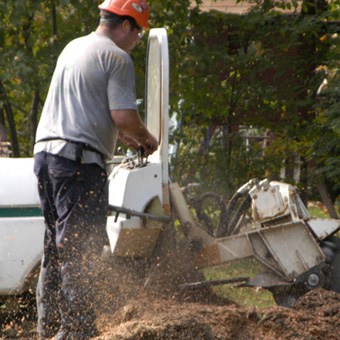
This is the question that comes up in almost every estimate conversation, and it’s worth understanding before you call anyone. Stump grinding uses a rotating cutting wheel to shred the stump down to several inches below ground level, turning it into wood chips. The root system stays in the ground and decomposes on its own over time — usually three to seven years depending on the species. It’s faster, less invasive, and significantly cheaper than the alternative.
Full stump removal means excavating the entire root system out of the ground. It’s the right choice in specific situations — if you’re building something directly over the stump location, for instance, or if the root system is actively causing damage to a structure or utility line. But for most Nassau County homeowners who just want a clean yard, stump grinding is the practical and cost-effective answer.
What's Actually Included in a Professional Stump Grinding Job
This is where the real cost comparison happens, and it’s where a lot of homeowners get burned by low quotes that don’t hold up. A complete stump grinding job isn’t just running a machine over the stump and leaving. Done right, it includes a site assessment before anything starts, a check for underground utilities — something that matters enormously in Nassau County, where gas lines, water mains, electrical, and cable infrastructure run beneath nearly every suburban yard — and then the grinding itself, followed by cleanup.
What cleanup looks like varies by company. The wood chips produced during grinding can be left behind as mulch (which is actually useful for garden beds), or they can be hauled away entirely. The area should be backfilled and left level, ready for grass seed or whatever you’re planning next. If a company’s quote doesn’t mention cleanup, ask specifically what happens to the chips and whether there’s an additional charge to remove them. That’s a common place where a low number becomes a less attractive number by the end of the job.
Underground utility coordination deserves its own mention here because it’s not optional — it’s a safety and legal requirement. In Nassau County, that means coordinating with PSEG Long Island and other utility providers to locate and mark lines before any grinding begins. Hitting a gas line or buried electrical cable isn’t a minor inconvenience. It’s a serious hazard. We handle this as a standard part of every job, not something you need to ask about.
The depth of the grind also matters more than most people realize. Grinding to 4 to 6 inches below grade is typically sufficient for lawn restoration — you can seed over the area within a few weeks. If you’re planning to install a patio, a raised garden bed, or new landscaping with deeper root systems, you’ll want the stump ground deeper, usually 8 to 12 inches below grade. That’s worth discussing upfront so our crew knows what the area needs to be ready for.
Why Nassau County Homeowners Should Think Twice Before Renting a Grinder
Rental grinders are available, and the idea of saving money by doing it yourself is appealing — especially when you’re already dealing with the cost of a tree removal. But the math on DIY stump grinding rarely works out the way it looks on paper, and Nassau County’s specific conditions make it even less practical than it might be elsewhere.
A rental grinder runs $85 to $400 per day, with delivery fees of $25 to $75 on top of that. Consumer-grade rental equipment is significantly less powerful than the machines we use, which means the job takes longer and the results are less thorough. On a large hardwood stump — the kind that’s common in Oyster Bay, North Massapequa, and Long Beach neighborhoods — a rental machine may not be able to grind deep enough to prevent regrowth or properly prepare the area for new landscaping.
There’s also the physical reality of operating a stump grinder. These machines are heavy, loud, and require real attention to technique. Rocks and debris in the grinding path can become projectiles. Roots that run toward underground utilities are a genuine hazard if you don’t know where those lines are. And if you damage an irrigation system, a fence, or a utility line in the process, the cost of repairs quickly exceeds whatever you saved on the rental.
More than 87 percent of homeowners who attempt DIY stump removal end up calling a professional to finish the job — after already spending money on the rental. That’s not a knock on anyone’s ability; it’s just what happens when the equipment doesn’t match the task. For a single stump, the price difference between renting and hiring a professional is often smaller than expected. For multiple stumps, professional pricing with per-stump bundling is almost always more cost-effective than multiple rental days.
Nassau County’s dense lots also mean you’re more likely to be working close to something — a fence, a foundation, a garden you’ve spent years building. The margin for error is smaller than it would be on a larger suburban or rural property. That’s worth factoring in before you decide which direction to go.
Getting a Fair Stump Grinding Estimate in Nassau County, NY
The most important thing you can do before calling anyone is know what you’re working with: the approximate diameter of the stump at ground level, the tree species if you know it, how accessible the area is, and what you’re planning to do with the space afterward. That information lets any company give you an accurate estimate — and it lets you evaluate whether the number you’re hearing is reasonable.
A fair estimate covers the grinding, the cleanup, and the site prep. It accounts for the species and size. It doesn’t change after the job starts. And it comes from someone who knows what they’re doing in Nassau County specifically — not just someone with a machine and a truck.
We’ve been working on Long Island for over 17 years. Our ISA Certified Arborist, Miguel Quintanilla (Certification #NY-6680A), brings a level of expertise that goes beyond operating equipment — it means every job is assessed properly from the start. If you’re ready for a straight answer on what your stump grinding will cost, reach out to us for a free estimate. No pressure, no surprises — just a clear number you can actually plan around.