
Summary:
You look out the window in July and your oak is dropping leaves onto the lawn. They’re still green. It’s the kind of thing that sends a Suffolk County homeowner straight to Google, and the first thing you find is the words “oak wilt” and “no cure.”
Take a breath. Leaf drop doesn’t automatically mean oak wilt, and plenty of oaks that get this disease can be protected from further damage with the right timing. What you do in the next few days matters more than what you do in a panic. Here’s how to read the warning signs, why the calendar matters so much for oaks, and what really happens when a tree is confirmed. First, a quick look at what oak wilt is.
Oak Wilt In Suffolk County: What It Is And Where It Has Been Found
Oak wilt is a fungal disease that clogs the tubes an oak uses to move water. The leaves wilt, then drop, and a red oak can die in as little as three weeks. There is no known cure. Once a tree is infected, the only options are removal and keeping a close eye on the oaks around it.
It isn’t just an upstate problem. In August 2016, DEC announced the first Long Island detection in Central Islip, and it started with a tree care professional who noticed symptoms and sent samples to Cornell. Later testing confirmed it in West Islip, Southold and Riverhead. DEC’s 2024 aerial surveys over known infected areas found no new cases, so this isn’t a story about a disease racing across the county. It’s a disease you can work around if you know the rules.
Why Is My Oak Tree Losing Leaves In Summer?
Start by looking at how the tree is losing them. Oak wilt tends to show up at the edges or top of the canopy first and works its way inward and down. The leaves often turn bronze or brown along the edges and fall while part of the leaf is still green. In a red oak, most of the canopy can be gone within a month or two.
Some infected red oaks also develop fungal mats under the bark, which can crack the bark open and smell fruity or like wine. That’s a sign we take seriously, and it’s worth documenting with photos if you see it.
Now the part that saves people from cutting down a healthy tree: anthracnose, a common leaf disease, can also drop a lot of leaves in late spring and early summer. The difference is that an anthracnose tree puts out a fresh set of leaves within a few weeks. An oak with wilt does not. Borers, root problems and general stress can also thin a canopy, but they rarely strip it as fast as oak wilt does.
So what should you do this week? Take photos of the whole tree and the affected branches, and write down the date. Don’t prune it, and don’t cut or haul any of the wood. If you can, grab a fresh sample from a branch that is actively wilting. Dry, fully brown wood is no use to a lab, and the lab is what settles the question.
Cornell’s Plant Disease Diagnostic Clinic is the same lab that confirmed Long Island’s first cases. Then give us a call. We’ll look at the tree with you, tell you honestly what we see, and won’t pitch a removal if the tree doesn’t need one.
Is Your Oak A Red Oak Or A White Oak, And Does It Matter?
It matters a lot, because the two groups behave very differently. Pick a leaf and look at the tips. Red oaks, which include red, scarlet, pin and black oak, have pointed or bristle-tipped leaves. White oaks have rounded lobes. Cornell Cooperative Extension of Suffolk County has a good red-versus-white identification guide if you want to check your own tree.
Red oaks take the hardest hit. They usually go downhill within weeks and are generally dead within a year of infection. White oaks decline much more slowly, and it can be years before an infected one dies. That slower pace is exactly why white oaks can fool people. A tree that looks fine this summer isn’t necessarily in the clear, and you shouldn’t assume it is. All oaks are susceptible.
The other thing to know is how the disease moves. Above ground, small sap-feeding beetles carry spores to fresh wounds on the tree. Below ground, the fungus can pass through root grafts, where the roots of neighboring oaks have grown together. On a typical Suffolk County lot with a couple of mature oaks near each other, that matters. If one is infected, the one next to it is worth watching. That’s the reason an early, accurate answer is worth more than a fast one, and it’s why we like to walk the whole yard rather than just look at the one tree you’re worried about.
When Not To Prune Oak Trees On Long Island
Here’s the part that surprises people. Spring is when most of us want to get out and prune, and for oaks it’s the riskiest time of the year. The fungus is active from roughly April through November, and beetles can find a fresh cut within about 15 minutes. A branch you trimmed on a nice Saturday in May is an open door.
DEC’s guidance for homeowners is to avoid pruning or wounding oaks from March through September, and to do your oak pruning in the dormant months of October through February, when the beetles aren’t active. That’s the window we plan around. It also means that sometimes the most helpful thing we can say to a caller in April is “let’s book that for the winter.”
Why Do Pruning Calendars For Oaks In Suffolk County Disagree?
If you’ve looked this up, you’ve probably seen three different answers. One local blog says April 15 to October 15. Another says February 15 to June 15. Cornell guidance says to skip pruning from April 15 to July 15. DEC’s own management plan calls March through July the highest-risk stretch and August through October lower risk, but not zero. Those numbers all circle the same fact: the early part of the growing season is the most dangerous, and the later months are a gray area.
Rather than argue over a single date, we go with the most cautious answer from the state agency. Prune oaks from October through February, and skip March through September. Winter is the cleanest option and it’s the one we’d book.
Real life doesn’t always cooperate, of course. A broken limb hanging over a driveway in June can’t wait for January. If a branch is a genuine hazard, it gets cut, and the wound should be sealed right away with a water-based spray paint or wound dressing. That’s the exception, though, and it’s worth knowing what a careful crew does. Be wary of anyone who tells you they can prune your oaks any time of year as long as they’re careful. Careful technique doesn’t cancel out the calendar. Our certified arborist on staff can take a look at your oaks, tell you which branches can wait, and help you plan a winter pruning visit around the trees that need it most.
What Happens To An Oak Tree With Confirmed Oak Wilt In Suffolk County?
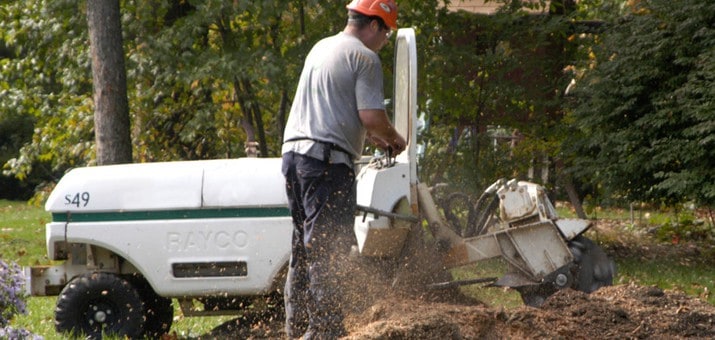
Most people only know the word “confirmed” from the news, and nobody explains what comes after. It starts with a lab. A sample goes to a diagnostic lab, and until it comes back, the tree stays put and the wood stays on your property. If it’s positive, the infected tree is removed and destroyed, and DEC treats the stump with herbicide.
At the original Central Islip discovery, the state set up a 150-foot “red oak free zone” and had every red oak inside it removed. DEC’s response is tied to a confirmed site and that 150-foot protocol, so a sick-looking oak doesn’t mean the state will show up and take your tree.
Moving the wood is the other big piece. When oak wilt was found here, the emergency order said oak material couldn’t leave the protected area unless it was chipped to under an inch in two dimensions, and that covered branches, logs, stumps and firewood. DEC has also put quarantine rules on moving oak wood in Suffolk County. Rules can change, so check DEC’s oak wilt page or ask us before any oak wood leaves your property. Please don’t give your neighbor the firewood, either.
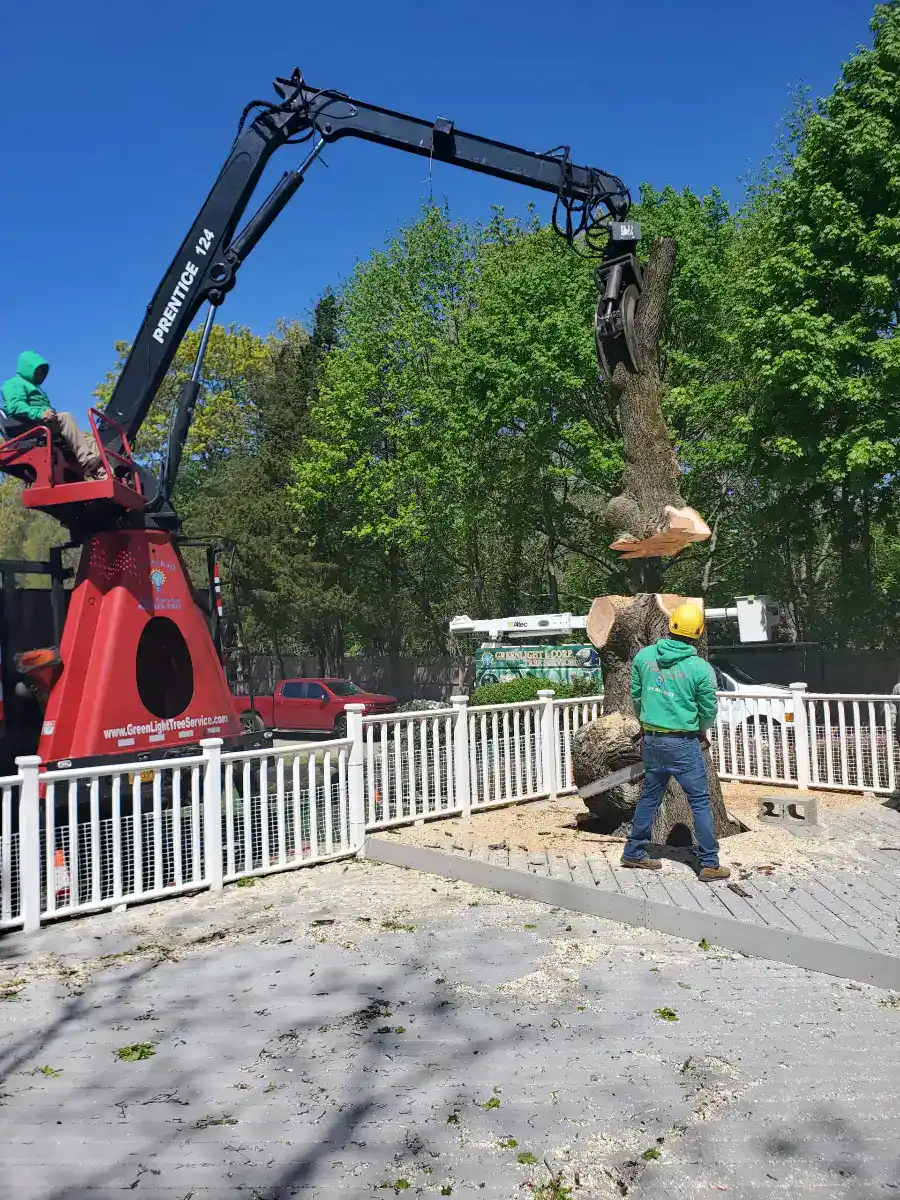
Replanting has its own rules. DEC advises against planting oaks within 150 feet of a current or past infection, and when DEC removes oaks it offers a two-inch replacement tree from a mix of non-oak species. For larger oaks, removal often means crane work, and we’ve done plenty of that. Our customers also tell us about the cleanup, so you can expect the yard to be left clear.
One more thing to sort out: laurel wilt, a separate disease that affects sassafras and spicebush, has turned up on Long Island too. Despite the similar name, it isn’t oak wilt, and the two are handled separately.
Worried About Your Oaks In Suffolk County? Start With A Look From Green Light Tree Services
Here’s what to remember. Leaf drop in summer isn’t automatically oak wilt, and whether the tree grows new leaves helps you tell. Don’t prune, cut or move oak wood while you’re waiting for answers. When it comes to routine pruning, October through February is the safe window, and spring is the one to avoid. If oak wilt is confirmed, there are real steps and real rules, and you don’t have to figure them out alone.
We’re a family-owned company based in Huntington Station, and we work across Suffolk County, including Islip, Riverhead, Greenport and New Suffolk, so we’re no strangers to the areas where oak wilt has turned up. If your oak looks wrong, or you want to get your winter pruning on the calendar, give Green Light Tree Services a call. We offer a free consultation, and if the honest answer is “wait,” that’s what we’ll tell you.