Summary:
If you own a home in Nassau County, you probably have at least one tree that needs work. Maybe it’s an overgrown oak dropping branches near the house, or a maple that’s starting to look more like a liability than an asset. The instinct is usually to either ignore it or call someone immediately — but a lot of routine tree maintenance falls right in the middle. You can handle it yourself, safely, if you have the right tools and a clear sense of where your limits are. This guide covers both.
Essential Tree Pruning Tools for Nassau County Homeowners
The foundation of any homeowner’s tree care setup is a small collection of cutting tools — each designed for a specific branch size. Using the wrong tool for the job doesn’t just make the work harder. It damages the tree. A crushed stem or a ragged cut creates a wound the tree struggles to seal, which opens the door to disease and decay.
The good news is you don’t need much. A quality hand pruner, a pair of loppers, a pruning saw, and a pole pruner will cover the vast majority of what you’ll ever need to do on your own property in Nassau County.
Which Pruning Tool Is Right for Which Branch Size?
This is the question most homeowners skip — and it’s the most important one. Each cutting tool has a practical limit, and working outside that limit either damages the tool, damages the tree, or puts you at risk.
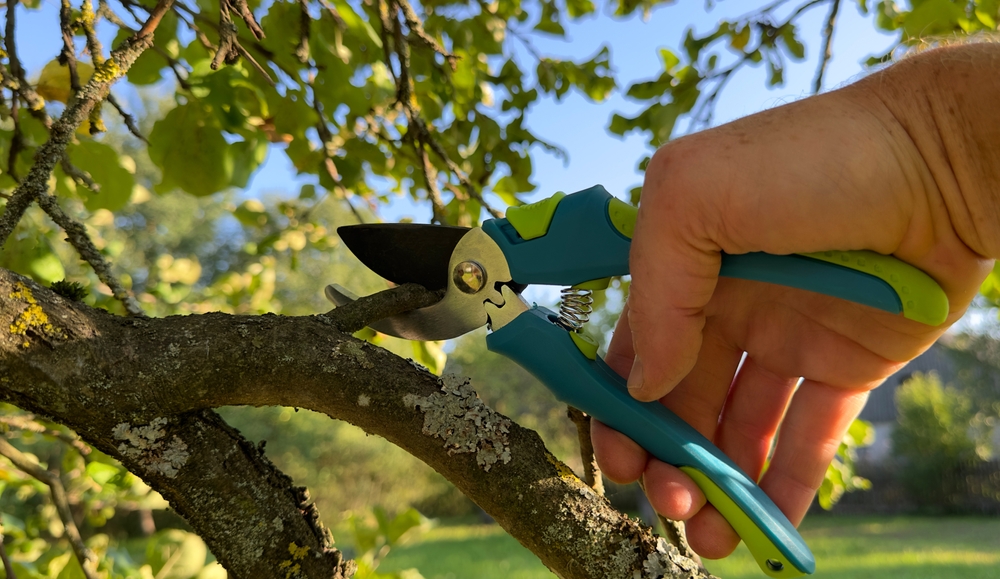
Hand pruners — sometimes called pruning shears or secateurs — are built for branches up to about three-quarters of an inch in diameter. These are your go-to for deadheading, light shaping, and removing small growth. When you’re shopping, look for bypass pruners rather than anvil-style. Bypass pruners work like scissors, making a clean slice through the branch. Anvil pruners press down onto the stem and crush it, which tears tissue and leaves a messier wound. Felco is the brand professional arborists reach for consistently — not cheap, but they last for decades with basic maintenance.
Once you’re dealing with branches up to two or two-and-a-half inches thick, loppers are the right call. They give you the leverage hand pruners can’t, and a quality pair from Corona or Fiskars will handle most medium branches without much effort. Beyond that — anything in the range of roughly two inches up to five inches in diameter — a pruning saw is what you want. A folding pruning saw is practical for homeowner use: compact, easy to store, and sharp enough to cut efficiently. Silky makes some of the best folding saws on the market, and the difference between a Silky and a cheap hardware store version is immediately obvious when you’re mid-cut on a stubborn branch.
For branches that are out of reach, a telescoping pole pruner lets you work safely from the ground on growth up to about fourteen or fifteen feet up. That reach matters more than it sounds, because the moment you’re on a ladder doing tree work, the risk profile changes significantly. Ladder falls are one of the most common serious injuries in DIY tree maintenance, and most of them are avoidable with a good pole pruner.
One technique worth knowing regardless of which saw you’re using: the three-cut method. Make a partial undercut from below first, then cut from above slightly further out to let the branch fall cleanly, then make your final cut at the branch collar — the swollen area where the branch meets the trunk. This prevents the branch from tearing bark on its way down. It takes an extra thirty seconds and it makes a real difference in how well the tree heals.
Why Tool Quality Matters More Than Most Homeowners Realize
There’s a temptation to buy the cheapest pruning tools at the hardware store and call it done. It’s understandable — you might only use them a few times a year. But the quality of the cut directly affects the health of the tree, and a dull or poorly designed tool does more harm than most homeowners expect.
Dull blades don’t slice — they tear. That tearing creates a larger wound surface, which takes longer to seal and is more vulnerable to fungal infection and pests. On Long Island, where the emerald ash borer has already spread into Nassau County, tool sanitation matters too. Wiping your blades with 70% isopropyl alcohol between trees takes thirty seconds and prevents you from unknowingly transferring pathogens from one tree to another. It’s a small habit with real consequences.
Professional-grade tools — Felco hand pruners, Silky saws, Corona loppers — cost more upfront but hold their edge longer, cut cleaner, and are built to be sharpened and maintained rather than thrown away after a season. If you’re maintaining mature oaks and maples, which are common throughout Nassau County neighborhoods from Oyster Bay down to Freeport, you want tools that are up to the job.
Sharpening matters too. A hand pruner that was sharp when you bought it two years ago probably isn’t sharp now. Most quality pruners can be resharpened with a simple whetstone or a dedicated pruner sharpener. It takes a few minutes and it’s worth doing before every season. The same goes for loppers and saws — a clean, sharp tool is a safer tool, because you’re not forcing it through the cut.
Tree Pruning Tools Are Only Half the Picture — Safety Gear Matters Too
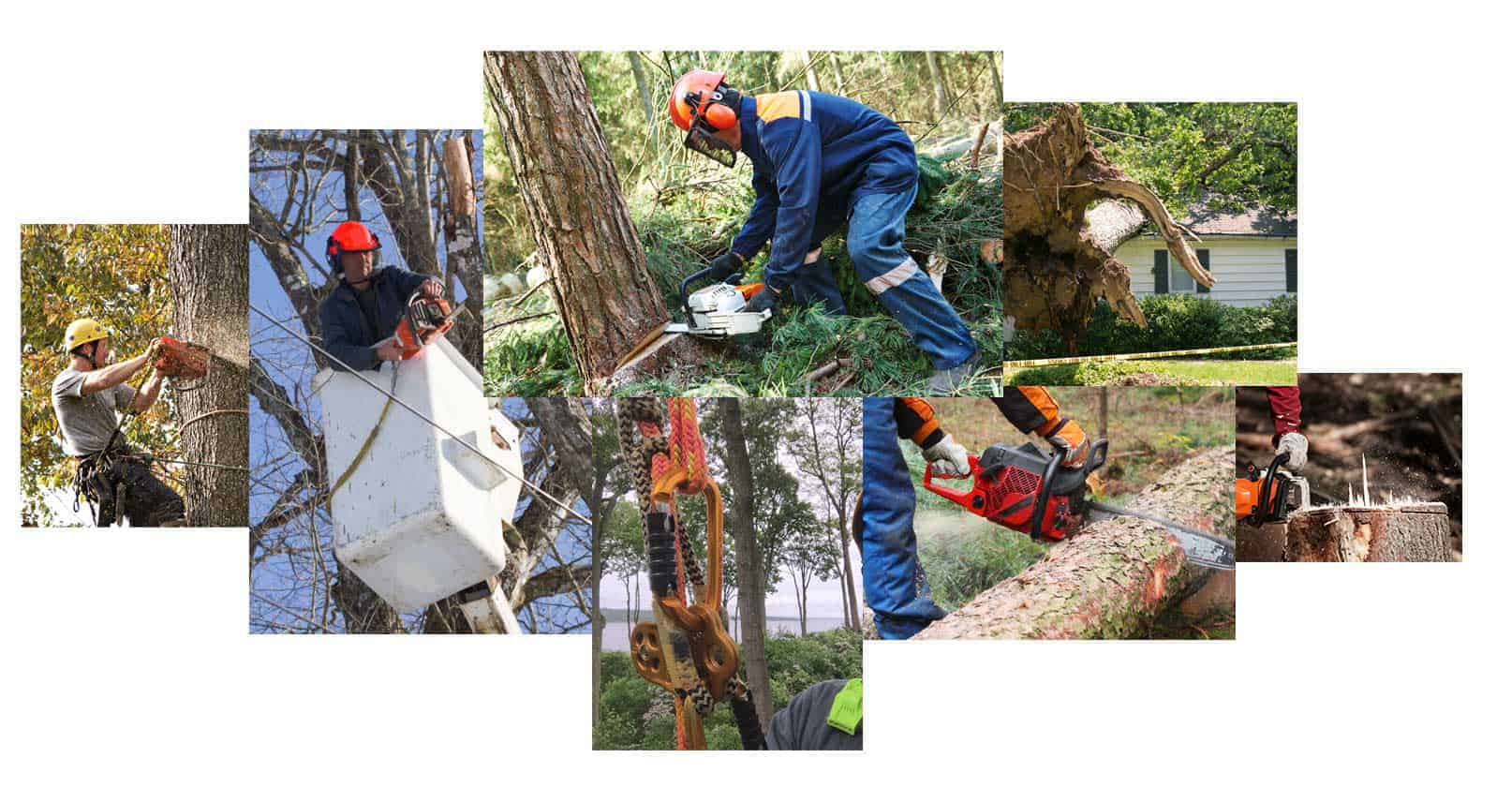
Tree care consistently ranks among the top ten most dangerous professions in the country according to OSHA. That’s for trained professionals with years of experience. For a homeowner doing occasional maintenance, the risks are real and worth taking seriously — not to scare you off doing the work, but to make sure you’re doing it in a way that doesn’t end badly.
The right protective gear is straightforward and not expensive. Eye protection rated to ANSI Z87.1 standards will block wood chips, sawdust, and debris. Cut-resistant gloves meeting ANSI/ISEA 105 standards protect your hands from both blade contact and rough bark. If you’re doing any overhead work, a helmet rated to ANSI Z89.1 is worth having. These aren’t arbitrary suggestions — they’re the specific standards that guarantee the gear is actually protective, not just decorative.
When Should Nassau County Homeowners Start Prepping Their Trees?
Timing makes a bigger difference than most people expect. On Long Island, the dormant season — late fall through early spring — is generally the best window for structural pruning. The tree is at rest, stress is minimized, and without leaves in the way you can actually see what you’re working with. Pruning during dormancy also sets trees up for stronger spring growth and, critically, better storm resilience heading into nor’easter season.
That last point is worth sitting with. Nassau County averages twenty-five to thirty thunderstorm days per year, and the spring storm season is particularly unforgiving. Post-winter soil is saturated, which weakens root systems, and a tree that survived a sixty-mile-per-hour nor’easter in December can fail in a forty-mile-per-hour May gust simply because the ground has no grip. A properly pruned tree with a balanced canopy handles wind load far better than one that’s been neglected or, worse, improperly topped.
Topping — cutting large branches back to stubs — is one of the most common mistakes homeowners and inexperienced crews make. It’s explicitly identified as an unacceptable practice under ANSI A300 pruning standards, and for good reason. It creates large wounds the tree can’t seal, leads to weak regrowth that breaks easily in wind, and significantly shortens the tree’s lifespan. If you’ve had a company suggest topping your trees, that’s worth questioning. Crown reduction — which reduces height while preserving the tree’s natural structure — is the professional alternative.
Seasonal timing also varies by species. Trees that produce heavy sap, like maples and birches, shouldn’t be pruned in early spring when sap is running. Spring-blooming ornamentals are best pruned right after they flower. If you’re not sure about the timing for a specific tree on your property, it’s worth a quick call to someone who knows Long Island’s tree species well.
Where to Buy Quality Tree Care Tools in Nassau County
For basic tools — loppers, hand pruners, folding saws — the Home Depot locations in Levittown, Massapequa, and Hicksville carry a decent range of consumer-grade options. Lowe’s in Carle Place and Valley Stream is another option for the same category. These stores will get you started, and for occasional homeowner use, the mid-range tools they carry are adequate.
For professional-grade brands like Felco and Silky, you’re more likely to find them through specialty landscape supply stores or online retailers. Big-box stores typically stock the mass-market lines, and there’s a noticeable step up in quality when you move to the professional tier. If you’re maintaining significant trees — the kind of mature oaks and maples that have been growing in Nassau County neighborhoods for forty or fifty years — the investment in better tools pays for itself quickly.
The Cornell Cooperative Extension office in Nassau County is also worth knowing about. They offer urban forestry programs and are a reliable local resource for tree care education, species identification, and guidance on what’s appropriate for Long Island’s specific growing conditions. It’s not a tool store, but if you want to understand your trees better before you start cutting, it’s a good place to start.
One thing to keep in mind: Nassau County’s tree-protection ordinances vary by township and village. Light pruning — removing less than about twenty-five percent of the canopy — generally doesn’t require a permit. But unpermitted removal of significant trees can result in fines up to ten thousand dollars in some municipalities, and the rules in Hempstead, Oyster Bay, and North Hempstead don’t always match each other. When in doubt, a quick call to your local building department or a certified arborist can save you a significant headache.
When Tree Care Tools Aren't Enough — Knowing Your Limits
A solid set of tree care tools handles a lot. Routine pruning, deadwood removal, light shaping — most of that is well within reach for a careful homeowner with the right equipment. But there’s a clear line, and it’s worth knowing where it is.
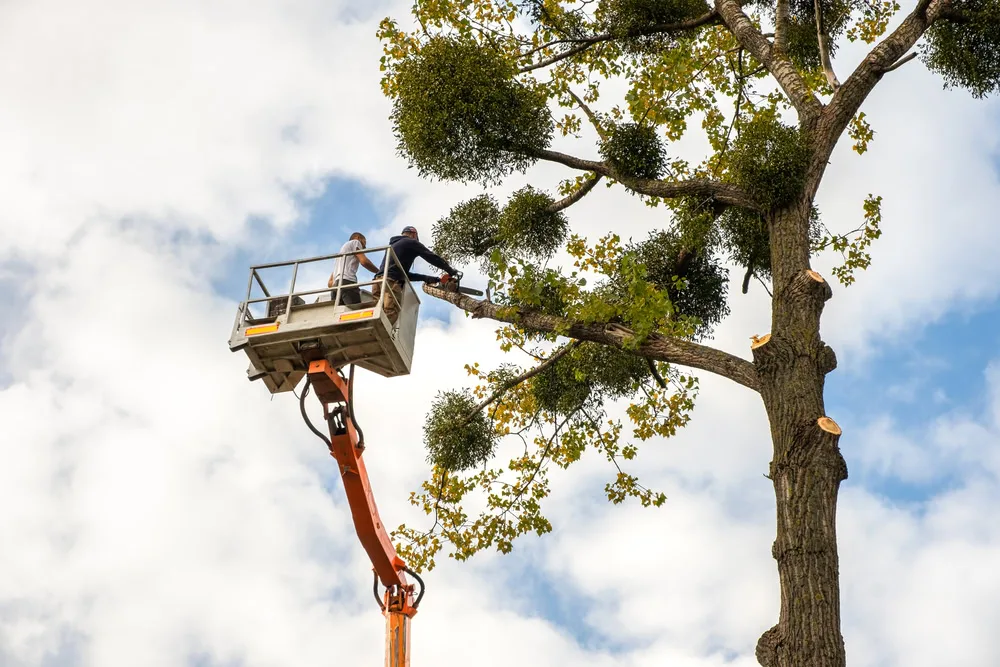
Branches over five inches in diameter, any work that puts you on a ladder, anything near PSEG Long Island power lines, and stump removal all fall into professional territory. Stump grinders in particular are powerful machines that require experience to operate safely — and in Nassau County, where underground utility lines run beneath nearly every yard, hitting a gas or water line is a genuine risk for anyone who doesn’t know what they’re doing.
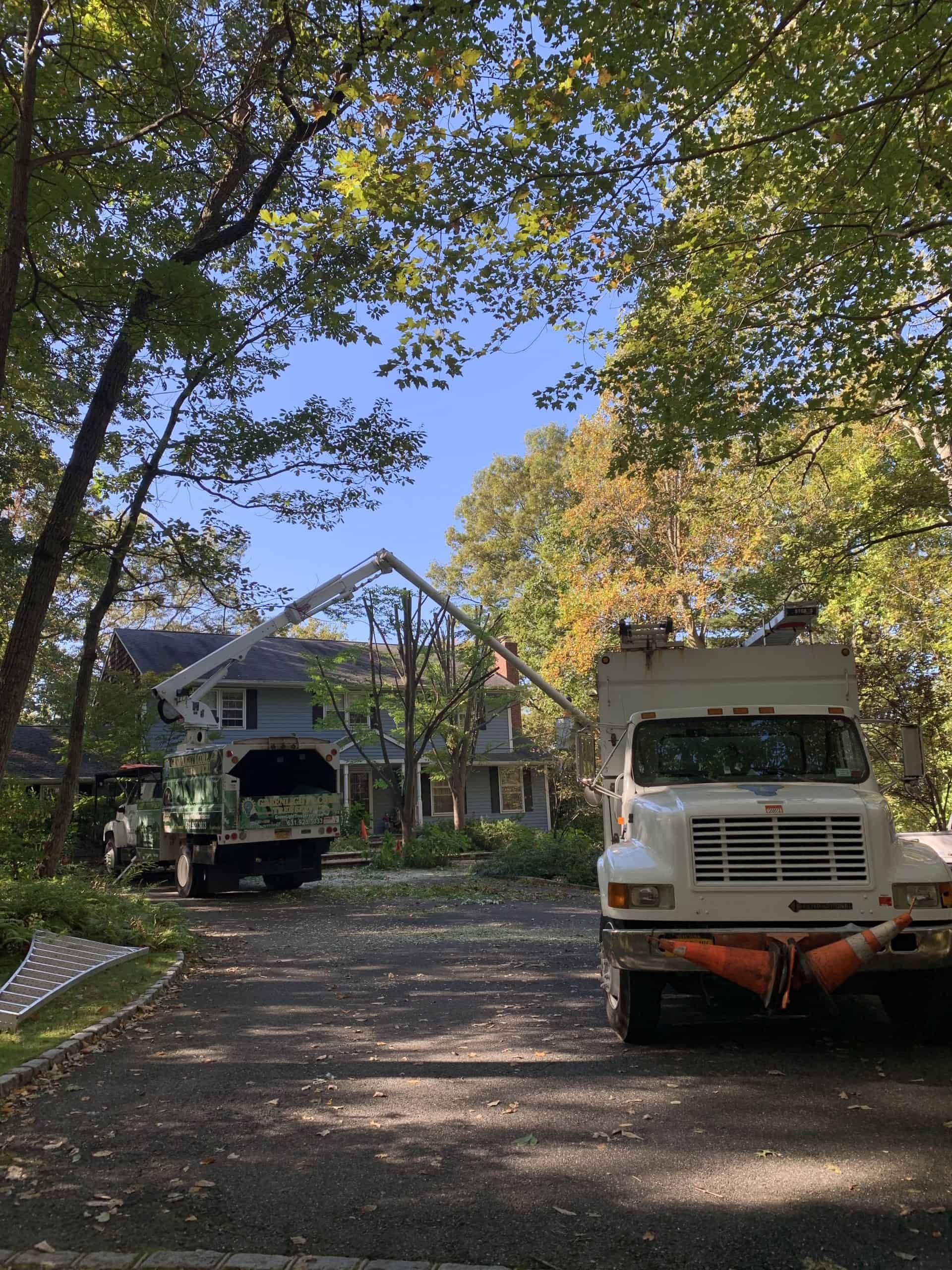
If you’re unsure whether a job is within your range, or if you’ve got a tree that’s been through one too many nor’easters and you’re not sure what you’re looking at, we’ve been working with Nassau County homeowners for over seventeen years. We have an ISA Certified Arborist on staff — Miguel Quintanilla, Certification NY-6680A — and we offer free estimates with no pressure and no hidden costs. Sometimes the answer is that you’ve got this. And sometimes it’s better to let us take a look first.