Summary:
Nassau County has been through Sandy. It’s been through Isaias. Most homeowners here don’t need to be convinced that storms are serious — they’ve already seen what one bad night can do to a neighborhood. What they’re less sure about is whether their trees are ready for the next one. That uncertainty is exactly where problems start. A tree that looks healthy in June can come through a roof in August, and the signs are almost never obvious from the ground. We’ve put together this guide to walk you through what a real tree risk assessment involves, what to look for before storm season, and how to protect your property — and your insurance claim — before it’s too late.
What a Professional Tree Risk Assessment Actually Involves
A tree risk assessment isn’t a quick walk around the yard. We use the ISA Tree Risk Assessment Qualification (TRAQ) methodology, which means looking at things most homeowners would never think to check — the structure of the trunk, the condition of the root zone, the attachment angles of major limbs, and signs of internal decay that don’t show up in the canopy at all.
This approach breaks down into three factors: how likely the tree is to fail, how likely it is to hit something if it does, and what the consequences of that impact would be. The output is a risk rating — Low, Moderate, High, or Extreme — for each tree and each potential target. That’s a written, defensible document, not just a verbal opinion from someone with a truck.
Tree Inspection Warning Signs Nassau County Homeowners Often Miss
The most dangerous misconception in tree care is this: if the tree has leaves, it’s fine. It’s not. A tree can have a full, vibrant canopy and still be one strong gust away from failure. Internal trunk rot, compromised root systems, and structural cracks don’t affect foliage — they affect the part of the tree you can’t see from your back porch.
Here’s what actually matters during a tree inspection. Cracks or splits in the trunk, especially vertical ones, are a serious warning sign. So are large dead branches — sometimes called widow makers — hanging in the upper canopy where they’re easy to miss until they’re falling. Fungal growth at the base of the trunk often signals decay that’s already well advanced inside. A sudden lean, particularly one that appeared after a storm or a wet season, suggests root failure is already underway.
Co-dominant stems are another one worth knowing about. That’s when a tree grows two or more main trunks from the same point, creating a V-shaped attachment that’s structurally weak under wind load. In Nassau County’s coastal neighborhoods, where mature oaks and maples have been growing for 60 or 70 years, these structural issues are common — and commonly overlooked.
Salt air is a factor that doesn’t get talked about enough. Proximity to the Atlantic and Long Island Sound means trees across Nassau County are exposed to conditions that gradually weaken their structure over time. That’s something we understand as a local arborist in a way that a national brand or an out-of-area crew simply doesn’t.
The goal of a professional tree inspection isn’t to find reasons to cut trees down. It’s to give you accurate information so you can make a real decision — whether that’s pruning, cabling, monitoring, or removal. Most of the time, there are options. But you can’t weigh those options without knowing what you’re actually dealing with.
How Tree Inspection Results Connect to Your Insurance Coverage
This is the part most homeowners don’t think about until they’re already filing a claim. Nassau County homeowners carry some of the most expensive homeowners insurance in the country — policies running $1,800 to $5,400 a year — with hurricane deductibles that typically run 2 to 5 percent of dwelling coverage. On a $400,000 home, that’s $8,000 out of pocket before your insurance pays a dollar of hurricane damage. That’s not a small number.
A written tree risk assessment report does two things in an insurance context. First, it documents the condition of your trees before a storm, which matters if a claim is disputed. Second — and this is the one most people don’t know about — if you’ve been told a tree is hazardous and you take documented steps to address it, that paper trail can protect you during the claims process. Insurance companies look at what you knew and when you knew it.
There’s also the neighbor angle, which comes up constantly in Nassau County given how close the lots are. Under New York law, once you notify a neighbor in writing that their tree is a potential hazard, they become liable if that tree falls. A professional assessment gives you the documentation to make that notification stick. Without it, liability disputes get complicated fast.
Tree damage is one of the most common homeowners insurance claims in Nassau County’s older, tree-canopied neighborhoods. The homes in Massapequa, Merrick, Wantagh, and Baldwin that were planted up with maples and oaks in the 1950s are now dealing with trees that are large, mature, and overdue for a professional look.
A $500 pruning job before hurricane season is not the same thing as a $5,000 emergency removal after one. Most homeowners learn that math the expensive way.
Hurricane-Proofing Nassau County Properties Before Storm Season
Hurricane season runs June through November, with the most active window being August through October. By the time a named storm is in the forecast, it’s too late. Reputable tree services are fully booked in the 48 to 72 hours before a major storm makes landfall. Preparation has to happen before anyone is talking about a specific storm.
The good news is that most of what makes a tree dangerous in a hurricane is addressable with the right work done at the right time. The key is knowing which trees actually need attention and what kind of work will make a meaningful difference.
Preventive Pruning Techniques That Reduce Storm Damage Risk
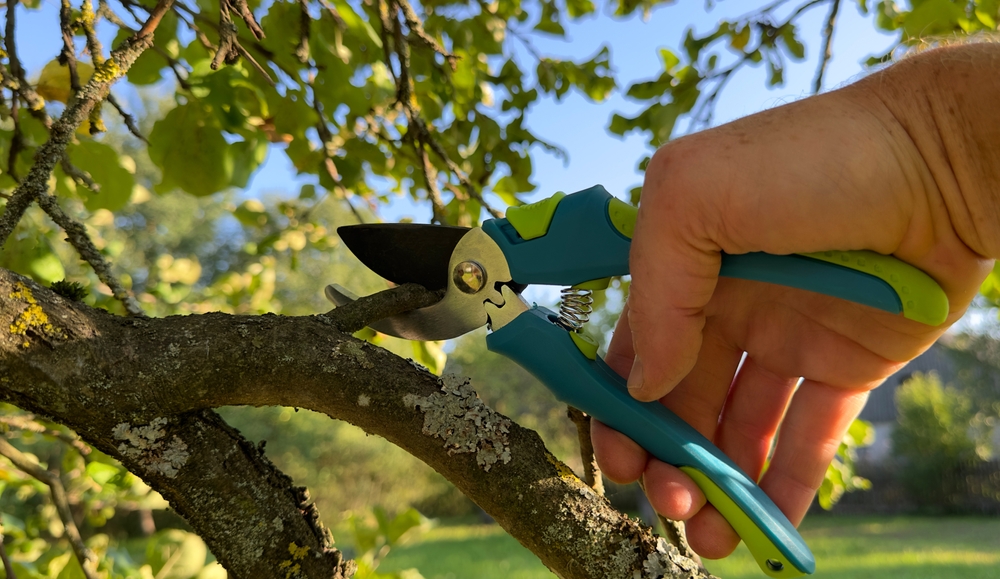
Pruning before hurricane season isn’t about aesthetics. It’s about reducing the amount of surface area the wind has to work with and removing the structural weaknesses that turn a strong gust into a catastrophic failure.
Crown thinning — selectively removing branches throughout the canopy — allows wind to pass through the tree rather than pushing against it like a sail. This is one of the most effective things we can do for a mature tree on a coastal Long Island property. It doesn’t change the look of the tree dramatically, but it changes how the tree behaves in a 70-mile-per-hour wind event significantly.
Deadwood removal is equally important. Dead branches don’t bend — they break. And when they break during a storm, they become projectiles. A large dead limb over a roof, a car, or a neighbor’s fence is a liability waiting to happen. Removing it before the storm is a straightforward fix. Dealing with the damage after is not.
For trees with structural issues — co-dominant stems, included bark, or heavy lateral limbs — cabling and bracing can provide supplemental support without removing the tree entirely. This is a legitimate option for trees that are worth preserving but have specific weak points that we’ve identified. It’s not a permanent fix for a tree that’s fundamentally compromised, but for the right situation, it buys years of safe life.
Timing matters too. Most pruning on Long Island is best done during the dormant season — late fall through early spring — when trees are less stressed by the work and structural issues are easier to see without foliage. Pre-hurricane season pruning in late spring is still valuable, but it’s worth knowing that the best window for major structural work is winter.
The right approach depends on the species, the age, the location, and what the inspection actually found. That’s not a decision that should be made based on a quick look from the driveway.
Emergency Storm Response Planning for Nassau County Homeowners
Even with the best preparation, storms cause damage. Knowing what to do in the first hours after a tree comes down is worth thinking through before you’re standing in your yard at midnight in the rain.
The first priority is safety, not cleanup. If a tree has hit a structure, stay out of the building until it’s been assessed — structural damage isn’t always visible from the outside. If a tree or branch is in contact with a power line, don’t go near it. Call PSEG Long Island and let them handle the line before anyone touches the tree. This is not a step to skip.
Document everything before any cleanup begins. Photos and video of the damage — the tree, the point of impact, the surrounding area — are the foundation of any insurance claim. Take them from multiple angles. If you can safely do so, photograph the base of the tree and any visible root damage, which helps establish the cause of failure.
For non-emergency situations — a tree that fell in the yard without hitting anything, a large branch down in the driveway — the response is still time-sensitive but not dangerous. Getting a professional out quickly matters because additional damage can occur if a partially failed tree is left in place during a subsequent storm or even a heavy rain event.
We offer 24/7 emergency response across Nassau County because storms don’t wait for business hours. The difference between a crew that answers at 2 AM and one that doesn’t is real. It’s worth knowing who you’re going to call before you need to make that call.
Post-storm, a written arborist report that documents what happened, what was removed, and what condition the remaining trees are in is useful both for insurance purposes and for planning any follow-up work. Nassau County homeowners who’ve been through Sandy or Isaias know that the cleanup is rarely one visit — it’s a process, and having documentation at each stage protects you.
When to Schedule a Tree Risk Assessment in Nassau County
The honest answer is: before you think you need one. The trees that cause the most damage are almost always the ones homeowners assumed were fine. A professional tree risk assessment gives you accurate information instead of assumptions — and in Nassau County, where a mature oak can sit 15 feet from a bedroom wall, assumptions are expensive.
Spring is a natural time to schedule an inspection, as trees are leafing out and problems that were hidden over winter become visible. But any time before peak hurricane season — before August — is meaningful. The work that comes out of an assessment, whether that’s pruning, cabling, or removal, takes time to schedule and complete properly.
We offer free estimates and 24/7 emergency response across Nassau County. If there’s a tree on your property you’ve been meaning to have looked at, contact us to get started.