Summary:
How to Tell If a Tree Is Dangerous
Not every tree problem means removal. Some issues can be fixed with pruning, cabling, or treatment from a certified arborist. But certain warning signs cross the line from “this tree needs help” to “this tree needs to come down now.” The difference isn’t always obvious if you don’t know what you’re looking at.
Dangerous trees show specific signs of structural failure, advanced disease, or decay that compromise their stability. The problem is that homeowners often write these off as normal aging or cosmetic issues. A bit of lean seems harmless until it increases after a storm. Dead branches feel manageable until one crashes onto your car.
Suffolk County presents unique challenges for tree health. Coastal winds here regularly hit 60 to 70 mph during nor’easters, and summer thunderstorms can bring gusts up to 80 mph. Trees that might hold up fine in calmer areas become liabilities in our weather patterns. Understanding the specific warning signs for tree removal isn’t just helpful—it’s necessary for property owners in this area.
Tree Leaning Toward House or Structures
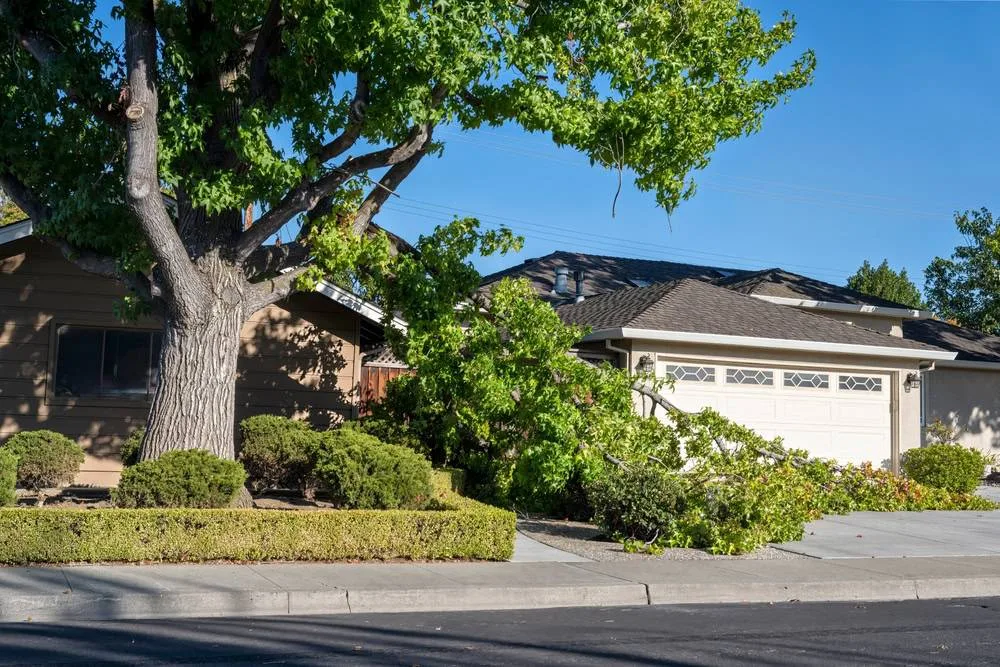
Some trees naturally grow with a slight lean. That’s not a problem. But if a tree that used to stand straight is now tilting—especially after a storm—you’re looking at a serious issue. Arborists generally consider a tree leaning more than 10 to 15 degrees from vertical to be unstable and at risk of falling.
The visible lean is just the symptom. What’s happening underground is the real problem. When trees start leaning, it usually means the root system is failing or the soil supporting those roots has shifted. Look for soil that’s heaving or cracking on one side of the tree—that tells you the rootball is moving and the tree is losing its anchor.
Exposed roots you don’t remember seeing before are another red flag. Whether from erosion, flooding, or the ground subsiding, newly visible roots mean the tree isn’t as stable as it used to be. After heavy rainfall, which Suffolk County gets plenty of during coastal storms, saturated soil can’t support trees the way dry soil does. If the ground feels spongy when you walk near the tree, it’s probably not holding that tree securely.
Trees with multiple trunks or long, heavy branches are more prone to toppling because the weight isn’t evenly distributed. Add compromised roots to that equation and you’ve got a tree that’s one strong wind away from coming down. If your tree has developed a new lean or the angle has gotten noticeably worse, don’t wait to have it assessed. A tree leaning toward your home, garage, or power lines isn’t something you can afford to monitor casually, especially with the storm patterns we see in this area.
Multiple Dead Branches or Thinning Canopy
A single dead branch doesn’t mean your tree is dying. But when you’re seeing multiple large dead limbs, or if more than 25 percent of the branches appear lifeless, that tree is in decline. Dead branches are sometimes called “widow-makers” because they can fall without warning—no storm required.
Dead wood becomes brittle. It breaks off during light winds, under snow load, or sometimes for no apparent reason at all. If you have dead branches hanging over your home, vehicles, driveway, or anywhere people spend time, you’re dealing with a falling hazard. Even if the rest of the tree looks healthy, those dead limbs need to be addressed.
Sometimes you’ll see dead branches concentrated on one side. This pattern often indicates root damage or trunk problems on that side of the tree. It’s not something you can see from the outside, which is why trees showing this symptom need professional evaluation.
During growing season, healthy trees should have full, green canopies. If yours is thinning out with sparse foliage or large sections that never leaf out, the tree is under serious stress. Discolored leaves—yellowing, browning early in the season, or wilting when neighboring trees look fine—point to disease, pest damage, or failing roots. When a tree can’t support normal growth, it’s using all its energy just to survive, and that makes it vulnerable to failure during the next storm.
Pay attention to how much debris your tree drops. Dying trees shed more branches than healthy ones as internal rot progresses. If you’re constantly cleaning up fallen limbs, especially larger ones, the tree is sending you a message. Yes, some species like sycamore and elm naturally drop branches, but excessive shedding is still a concern.
Here’s a guideline used by arborists: if 50 percent or more of the tree is dead or damaged, removal is typically the safest choice. At that point, there isn’t enough healthy structure left for recovery, and what remains is a risk to everything nearby.
Signs of Decay and Root Damage
The most dangerous tree problems are the ones you can’t see. A tree can look relatively normal from the outside while being hollow or severely rotted inside. By the time visible symptoms appear, the structural damage is often extensive. Certain external clues should trigger an immediate call to a certified arborist.
Internal decay doesn’t always lead to dramatic failures. Sometimes trees deteriorate slowly, losing pieces here and there. Other times they go down all at once, usually during high winds or storms. Either scenario is dangerous when the tree is near your home or in areas where people gather regularly.
Hollow Trunk or Cavities in the Wood
A hollow trunk is one of the clearest signs that tree removal is necessary. Trees can technically survive for years with internal decay because the living tissue that moves water and nutrients sits on the outer edges. But a hollow trunk has lost the structural strength needed to support the weight of the canopy, especially during Suffolk County’s frequent high winds.
If you can see cavities in the trunk, or the wood feels soft and spongy when you press on it, that’s advanced rot. Deep vertical cracks or splits in the bark that extend into the interior wood mean the tree is failing structurally. These cracks commonly appear where the trunk divides into two main stems, and they represent serious defects.
Large wounds on the trunk—from storm damage, vehicle impact, or bad pruning cuts—create pathways for decay organisms. If the damaged area covers more than 25 percent of the trunk’s circumference, the tree may not be able to seal the wound and recover. Smaller injuries can heal, but once decay establishes itself inside, it spreads through the heartwood.
Bark acts as the tree’s armor. When bark is peeling away in large sections, missing entirely, or separating from the trunk, the tree is compromised. Without that protective layer, decay accelerates and structural integrity declines rapidly. Dead branch stubs on the trunk show where the tree has already started dying from within.
Arborists use this general rule: if one-third of the tree’s interior is hollow or rotten, removal is recommended. At that point, the trunk can’t reliably hold up the canopy, particularly when wind speeds reach 60 to 70 mph like they do here during nor’easters and coastal storms.
Fungal growth near the base—mushrooms, conks, or shelf fungi—indicates significant decay in the roots or lower trunk. These organisms feed on dead and dying wood. If you’re seeing them, the rot has been progressing for quite a while, possibly years. Soft or spongy wood at ground level means the tree’s load-bearing capacity has diminished to the point where failure becomes likely under the right conditions.
Root Problems and Damage Near the Base
What’s happening underground is just as critical as what you see above ground. Root problems are harder to detect, but they’re often what causes trees to topple. If the roots can’t anchor the tree properly or have sustained damage, even a healthy-looking canopy won’t prevent failure.
Soil that’s heaving or lifting around the tree base is a major red flag. If the ground is bulging or cracking on one side, the rootball is shifting and the tree is becoming unstable. This frequently happens after heavy rain when saturated soil loses its ability to hold roots in place. Suffolk County sees this pattern regularly during coastal storms—trees that seemed fine suddenly lean or fall because the soil can’t support them anymore.
Exposed roots that weren’t visible before suggest erosion or ground subsidence. When roots that should be buried are suddenly at the surface, they’re not providing the anchoring support the tree needs. Root damage from construction activity, utility trenching, or excavation near the tree can destabilize it even when the visible parts look healthy.
Mushrooms or fungal growth clustered around the trunk base indicate root rot. Rotting roots can’t support the tree’s weight or keep it stable during storms. An abundance of mushrooms appearing after rain is a warning that the root system is compromised and decay is active.
Construction impacts can be particularly damaging. Whether it’s trenches for utilities, excavation for home additions, or heavy equipment compacting the soil, root systems can be severely harmed. Trees sometimes take a year or two to show obvious decline after root disturbance, but by then the damage is irreversible.
Roots need oxygen, water, and space. If three inches or more of soil has been added over the root zone—from landscaping, regrading, or fill dirt—the tree will likely die because the roots suffocate. Similarly, if soil has been scraped away exposing roots to air and temperature extremes, the tree’s stability is compromised.
Trees planted too close to structures create problems in both directions. Roots may damage foundations, driveways, sidewalks, or underground utilities. At the same time, the confined space and compacted soil stress the tree and increase failure risk. Large trees should generally be at least 20 feet from buildings, and species that grow taller than 60 feet need even more distance.
What to Do If Your Tree Shows Warning Signs
If you’ve spotted any of these warning signs in your trees, the next move is getting a professional assessment. Not every problem tree requires immediate removal—some can be saved with proper pruning, cabling, or treatment. But you need a certified arborist to make that determination, especially when safety is at stake.
The smartest approach is addressing problems before you’re forced into emergency tree removal. Removing a dangerous tree on your schedule is safer, less expensive, and far less stressful than dealing with one that’s already fallen on your home or blocked your driveway during a storm. Dead tree removal cost in Long Island typically ranges from $500 to $2,300 depending on size and complexity, but emergency tree removal after storm damage can cost significantly more.
Don’t wait for the next nor’easter or summer thunderstorm to find out whether your tree will hold up. If you’re seeing signs of lean, dead branches, hollow sections, root problems, or decay, contact us at Green Light Tree Services for a free estimate. Our certified arborists can evaluate your trees, explain your options clearly, and help you make the right decision for your property and your family’s safety in Suffolk County, NY.