Summary:
You’ve been eyeing that tree for a while. Maybe it leans a little more than it did last year, maybe it’s crowding the roof, or maybe you’re clearing space for a pool or an addition. So you search for the best time to remove a tree, and nearly every answer says the same thing: wait for winter.
For plenty of trees, that’s sound advice. For some, it’s the wrong call, and on Long Island the difference matters. Nor’easters, salt air, and sandy soil all change how trees behave out here. Let’s work out which group your tree belongs in.
When Is The Best Time To Cut Down A Tree In Suffolk County?
For a healthy tree that can safely wait, the best time to cut it down in Suffolk County is late fall through early spring. The sweet spot is usually January through March. Leaves are typically down by November and buds start to swell around April, so that’s your window for dormant season tree removal.
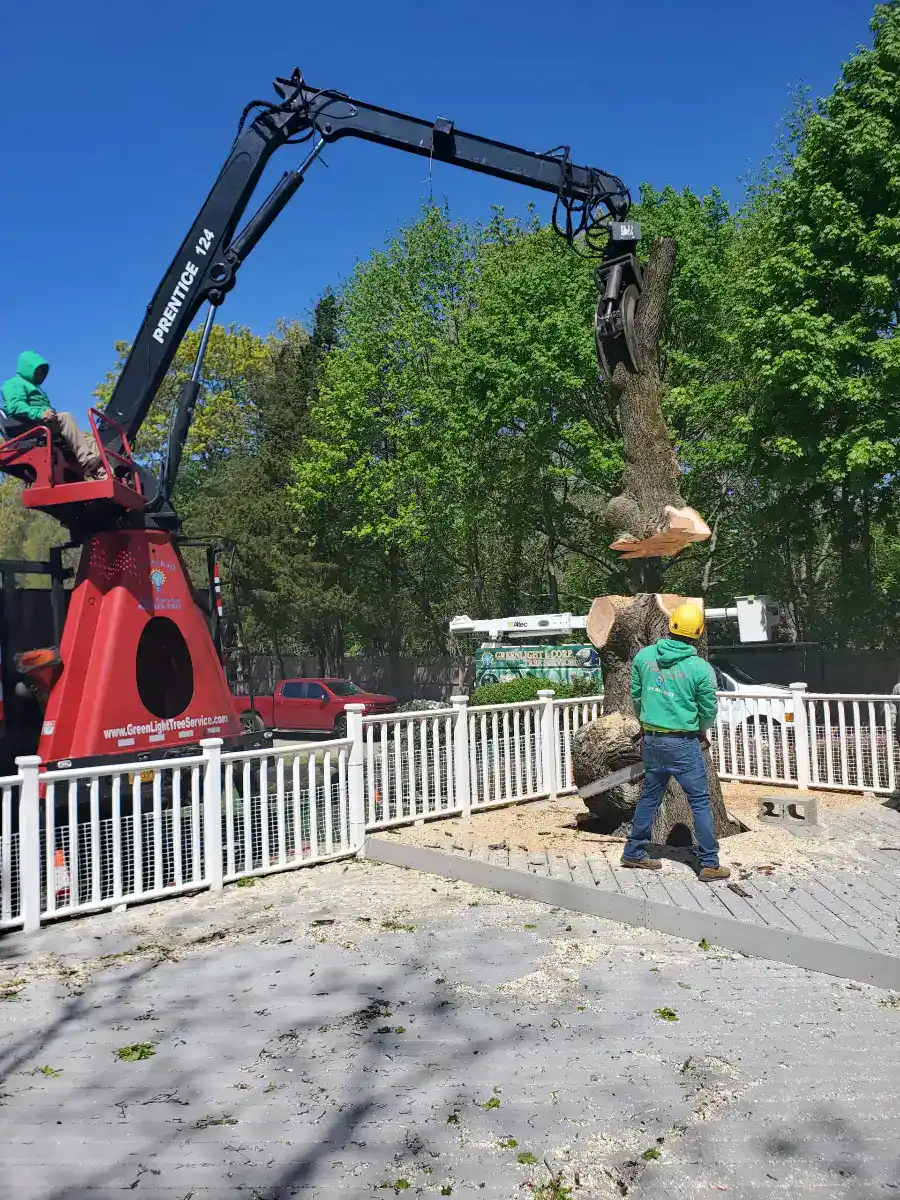
The reasons are mostly practical. With no leaves in the way, a crew can see cracks, decay, and weak joints that summer foliage hides, which makes for a safer plan before anyone starts cutting. There’s less debris to haul, your patio furniture and kids’ toys are put away, and crews are usually less booked than they are in spring and summer.
There’s a catch, though. That window only works for trees that can afford to wait.
Which Suffolk County Trees Shouldn't Wait Until Winter?
Think of the calendar as a guide for planned work, not a rule for every tree. Some trees around Suffolk County don’t care what month it is.
Ash trees are the big one. Emerald ash borer has been confirmed across Long Island, and an ash killed by it turns brittle much faster than most people expect. A tree that looked fine in August can start dropping limbs in the first strong November wind.
Red oaks are another concern. Local arborists report oak wilt in several spots across Suffolk County, including Central Islip, West Islip, Babylon, Riverhead, and Southold, and it can kill a red oak in a single season. A tree in that condition isn’t going to sit politely until February.
Then there’s storm damage. After a nor’easter or a hard summer thunderstorm, a split trunk, a new lean, or a large hanging branch changes the picture completely. Wind off the water is stronger than it feels from your kitchen window, and years of salt air along the North and South shores wear on trees. A tree that’s been stressed for a long time can fail all at once.
None of this calls for panic. It just means “I’ll wait until winter” is a reasonable plan for a healthy, stable tree and a gamble for a dead, leaning, or sick one. If you’re not sure which you have, settle that first. Waiting four months on the wrong tree costs far more than an early phone call.
How Do You Know If Your Tree Can Wait Until Winter?
Start with what the tree is doing in the middle of the growing season. If one side of the canopy never leafed out, if leaves browned and dropped in July, or if big limbs are bare while the neighbors’ trees are full, that’s worth a closer look. So is bark peeling away in sheets, mushrooms growing at the base, or a crack running up the trunk.
Lean matters too, especially a new one. Long Island’s sandy soil doesn’t hold roots the way heavier ground does, so a tree that has started to tilt after a storm, or has soil heaving up on one side, shouldn’t be written off as “just settling.” A lean that’s been there for thirty years is a different story from one that appeared last March.
Location changes the stakes. A weak tree at the back of a big lot in Orient is a different problem from one hanging over a driveway in Centereach or a bedroom roof in Farmingville. The same defect carries more risk the closer it is to people and property.
You don’t have to figure this out alone. When we come out for an assessment, our arborist explains what needs to be done and why it’s necessary, then gives you a clear estimate with no surprises. If the tree can safely wait for January, we’ll tell you that and help you plan around it. If it can’t, you’ll hear that too, and we’re available 24/7 when a storm forces the issue.
What Winter Tree Removal On Long Island Really Looks Like
A lot of national articles describe winter removal as a rock-hard, frozen-ground, big-discount situation. Long Island rarely works that way. Our winters are milder and the frost comes and goes, so the real benefit is firmer, drier ground than you’d get in a soggy April. That means less rutting from heavy equipment, which your lawn will appreciate.
You also get a clear view of the tree’s structure and crews who can often fit you in more easily. Off-peak scheduling can help with pricing, but it isn’t guaranteed, and we won’t promise a winter discount just to get you on the calendar.
Can you remove a tree in summer or spring? Absolutely. Removal happens year-round, and you’ll likely want it sooner if the tree is a hazard. Pruning is a separate question with its own timing, and our pruning guide points to late winter or early spring for that work.
Do You Need A Permit To Remove A Tree In Suffolk County?
Often, yes, and this is the part that catches people off guard. Tree rules in Suffolk County are set town by town, so what applies in Brookhaven may not match Huntington, Smithtown, or Southampton. Lot size, tree size, protected areas, and whether the tree is dead or hazardous can all change the answer.
Brookhaven’s town code, for instance, limits how many trees you can take down without a permit and sets extra requirements for hazardous or dead trees, such as documentation from an arborist or photos. Local tree services also report that skipping a required permit can bring fines as high as $10,000. Because the exact fees and rules vary and change, check directly with your town before you schedule anything.
Here’s why this matters for timing. The best window for planned removal is only a few months long, and permit approval isn’t instant. If you wait until January to start asking questions, you can end up pushing the job into spring, when crews get busy and the leaves are back.
A more practical plan is to start in September or October. Look up your town’s rules, get an on-site assessment, and settle on a written estimate. That way, when the leaves drop, you’re ready to book rather than just beginning the paperwork.
If the tree is dead or damaged enough that it’s an immediate risk, don’t let the permit question stall you. Call us, and we’ll look at it and tell you what we’re seeing.
How Much Does Tree Removal Cost On Long Island, And Who Should You Hire?
Costs depend on the tree’s size, access, condition, and what needs to happen afterward. As a general guide, a 2026 Long Island price guide puts typical Suffolk County removals at roughly $300 to $700 for small trees under 30 feet and $600 to $1,300 for medium trees between 30 and 60 feet. Larger trees cost more. Those are general estimates from third parties, not our quotes, so get an on-site look before you rely on any number.
When you compare bids, look past the price. Ask for a written estimate, ask whether cleanup and haul-away are included, and ask any company for a certificate of insurance. Be cautious about door-knockers after a storm, out-of-area crews, and bids that come in suspiciously low, because those often mean skipped insurance or skipped cleanup.
We’re a licensed and insured, owner-operated company with over 17 years of experience, working from Huntington Station and serving homeowners from Farmingville and Centereach out to Orient on the North Fork. Our crews protect your landscaping while they work, and cleanup is what customers mention most in our reviews. They tell us the yard was left clean, the crew was easy to work with, and the work was finished on time.
That’s what a tree job should feel like, whether it’s a single oak or six large backyard trees in one day.
Ready To Schedule Tree Removal In Suffolk County?
Here’s the short version. For a healthy tree, plan on late fall through early spring, with January through March the sweet spot. For a dead, leaning, storm-damaged, or sick tree, especially ash and red oak, don’t wait for the calendar. Check your town’s permit rules early, and start the process in the fall if you want a winter job.
If you’re not sure which category your tree falls into, Green Light Tree Services can take a look. We’ll give you a straight answer on timing, a clear written estimate, and a crew that cleans up like they’d want their own yard left. Reach out to Green Light Tree Services whenever you’re ready, whether that’s today or this September.