Summary:
What Is Stump Grinding and How Does It Work
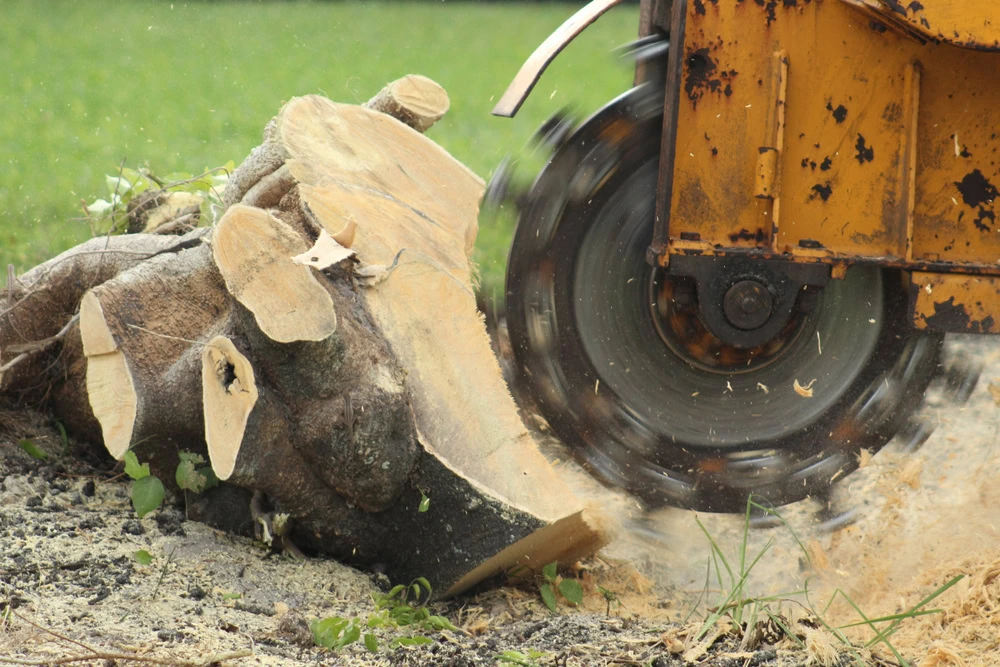
Stump grinding is the process of using a specialized machine to mechanically grind a tree stump down into wood chips. The grinder has a rotating cutting wheel with carbide teeth that chip away at the wood, reducing the stump to below ground level—typically anywhere from four to twelve inches deep, depending on what you’re planning to do with the space afterward.
Unlike full stump removal, which involves digging out the entire stump and root system with heavy equipment, grinding focuses on eliminating the visible stump and the immediate root ball. The roots left behind will decompose naturally over time, which actually adds nutrients back into your soil. The process is faster, less invasive to your landscape, and leaves you with a pile of wood chips that can be repurposed as mulch or used to fill in the hole.
Most grinding jobs take anywhere from fifteen minutes to a couple of hours, depending on the size of the stump and the type of tree. Hardwoods like oak take longer to grind than softer woods like pine, but our crew with the right equipment can handle any stump efficiently.
Stump Removal vs Stump Grinding: What's the Difference
When people talk about getting rid of a stump, they’re usually referring to one of two methods: grinding or removal. Understanding the difference helps you make the right call for your property.
Stump removal means pulling the entire stump out of the ground, roots and all. It requires digging around the stump to expose the root system, then using heavy machinery or manual labor to extract everything. The upside is that you’re left with a completely clear area—no stump, no roots. The downside? It’s labor-intensive, time-consuming, and leaves a massive hole in your yard that needs to be filled and leveled. It also costs significantly more, typically seventy-five to two hundred dollars more than grinding.
Stump grinding, on the other hand, grinds the stump down to below ground level without disturbing the surrounding landscape. The roots stay in place and break down over time. This method is faster, more affordable, and causes minimal disruption to your yard. The small depression left behind can be filled with the wood chips produced during grinding, then topped with soil and grass seed. For most homeowners, grinding offers the best balance of cost, speed, and results.
The main reason to choose removal over grinding is if you’re planning to replant a tree in the exact same spot or if you need to dig deep for construction. Otherwise, grinding handles the job without the mess and expense of full excavation.
One thing to keep in mind: if the tree was removed due to disease or a pest infestation, you’ll want to make sure those wood chips are disposed of properly rather than used as mulch. We’ll advise you on the best course of action based on the condition of the tree that was removed and keep your other plants safe.
How Much Does Stump Grinding Cost in Suffolk County
Cost is one of the first questions homeowners ask, and the answer depends on a few factors: the size of the stump, the type of tree, how accessible the stump is, and how many stumps you need ground.
Most tree services price stump grinding by diameter. On average, you’re looking at two to five dollars per inch of stump diameter. So a stump that’s twenty inches across might cost anywhere from forty to one hundred dollars, though many companies have a minimum service fee—usually around one hundred dollars—regardless of size. If you have multiple stumps, the price per stump typically drops after the first one since the equipment is already on site.
In Suffolk County, NY, stump grinding costs tend to fall within the national average range of one hundred twenty to four hundred thirty-eight dollars per stump. Larger stumps or those made of dense hardwood like oak or maple will be on the higher end. Stumps in tight spaces or difficult terrain may also add to the cost due to the extra time and effort required.
Stump removal, by comparison, costs significantly more—often three hundred seventy to six hundred seventy-five dollars per stump—because of the labor and equipment involved. You’re also left with a big hole to fill and additional cleanup work.
The good news is that grinding produces wood chips you can use as mulch, which saves you money on landscaping materials. Many homeowners find that the cost of grinding pays for itself when you factor in the safety improvements, pest prevention, and the usable space you get back. And compared to leaving the stump in place for ten to twenty years while it slowly decays, grinding is a one-time expense that solves the problem immediately.
If you’re getting quotes, make sure to ask what’s included. Some companies include cleanup and hauling away the wood chips, while others leave that to you. Knowing what you’re paying for upfront helps you compare apples to apples.
Why You Should Grind a Stump After Tree Removal
Leaving a stump in your yard might seem harmless at first, but it creates problems that get worse over time. Stumps don’t just sit there quietly—they become tripping hazards, attract pests, take up space, and make yard maintenance harder than it needs to be.
Grinding eliminates those issues quickly and affordably. It removes the eyesore, prevents the safety risks, and gives you back the space you need for landscaping or just enjoying your yard. For most Suffolk County homeowners, grinding is the most practical solution after tree removal. Here’s why it’s worth doing.
Stumps Create Safety Hazards and Attract Pests
The most immediate problem with leaving a stump in place is safety. Stumps are easy to miss, especially if they’re partially hidden by grass or surrounded by landscaping. Kids playing in the yard, guests walking around during a barbecue, or even you mowing the lawn—anyone can trip over a stump and get hurt. If there are exposed roots around the stump, the risk is even higher.
Stumps also damage lawn equipment. Hitting a stump with your mower can bend blades, break belts, or cause more serious mechanical problems. Even if you’re careful, mowing around a stump wastes time and makes it harder to get a clean, even cut on your lawn.
Then there’s the pest problem. As a stump begins to decay, it becomes a breeding ground for termites, carpenter ants, beetles, and other wood-boring insects. Subterranean termites are especially concerning because they live underground and can travel from a decaying stump to your home through mud tubes they build below the soil surface. Once termites find a food source, they don’t stop at the stump—they’ll move on to nearby trees, fences, decks, or even the wooden structure of your house.
Fungal growth is another issue. Stumps that are rotting often develop mold, mushrooms, or other fungi that can spread spores to healthy trees and plants in your yard. If the tree was removed because of disease, leaving the stump behind can keep that disease active and put your other trees at risk.
Grinding the stump eliminates the decaying wood that attracts these pests and pathogens. It removes the food source, which means termites and other insects have no reason to stick around. You’re not just improving the look of your yard—you’re protecting your property and your home from potential infestations that can cost thousands of dollars to treat.
Some homeowners think that if the stump is far from the house, it’s not a problem. But termites can travel up to one hundred feet from their colony to find food, and carpenter ants are just as mobile. Distance doesn’t eliminate the risk—it just delays it. Grinding the stump takes care of the problem before it becomes a bigger issue.
Stump Grinding Reclaims Space and Produces Usable Mulch
Stumps take up more space than you realize. That dead spot in your yard where nothing grows, where you can’t mow or plant—it’s wasted space that could be put to better use. Grinding the stump opens up that area for new landscaping, a garden bed, a patio, or just more lawn. You’re not just removing an obstacle—you’re reclaiming square footage that adds value and usability to your property.
If you’re planning to sell your home, a stump-free yard looks better to potential buyers. Curb appeal matters, and a clean, well-maintained landscape signals that the property has been cared for. Stumps, on the other hand, suggest neglect and can raise questions about what other maintenance has been ignored.
One of the unexpected benefits of stump grinding is the mulch it produces. As the grinder chews through the stump, it creates a pile of wood chips that can be used in your garden beds, around trees and shrubs, or as a natural pathway material. Mulch helps retain soil moisture, regulates temperature, suppresses weeds, and breaks down over time to add organic matter back into the soil. Instead of paying for bagged mulch at a garden center, you’re getting it as a byproduct of the grinding process.
Some homeowners use the wood chips to fill in the hole left by the stump, then cover it with a layer of topsoil and grass seed. Within a few weeks, the area blends back into the lawn and you’d never know a stump was there. Others haul the chips to different parts of the yard where they’re needed. Either way, you’re turning what was a problem into a resource.
There’s one caveat: if the tree was diseased or infested with pests, you shouldn’t use the wood chips as mulch. In those cases, the chips need to be disposed of to prevent spreading the problem to healthy plants. We’ll advise you on the best course of action based on the condition of the tree that was removed.
Stump grinding also prevents regrowth. Some tree species—like silver maple, black locust, and certain oaks—will send up new shoots from the stump if it’s left in the ground. These shoots can pop up for years, forcing you to keep cutting them back. Grinding destroys enough of the stump and root structure that regrowth isn’t an issue. The remaining roots will decompose naturally without sprouting new growth, and over time they’ll enrich the soil as they break down.
Is Stump Grinding Worth It for Your Suffolk County Property
Stump grinding solves multiple problems at once. It eliminates safety hazards, prevents pest infestations, reclaims usable yard space, and produces mulch you can use elsewhere on your property. Compared to full stump removal, grinding is faster, more affordable, and less disruptive to your landscape. For most homeowners, it’s the smartest choice after tree removal.
If you’re dealing with a leftover stump on your Suffolk County property, don’t wait for it to become a bigger problem. The longer it sits, the more likely it is to attract termites, cause injuries, or interfere with your plans for your yard. Grinding takes care of it quickly and gives you back the space you need.
We handle stump grinding with professional-grade equipment and the experience to get the job done right. Reach out to discuss your stump and get your yard back to looking and functioning the way it should.