Summary:
After a storm moves through Nassau County, the instinct is to walk the yard, take stock of the damage, and get back to normal as fast as possible. That instinct makes sense. But it can also get you into trouble. Storm-damaged trees don’t always fail immediately — some of the most dangerous situations develop quietly over days or weeks, completely invisible to the untrained eye. This guide covers the five red flags that signal real structural risk, what they mean, and when it’s time to stop assessing on your own and call someone who can actually tell you what you’re dealing with.
How to Tell If a Storm-Damaged Tree Is Actually Dangerous
The challenge with storm damage trees isn’t identifying the obvious stuff — a tree that’s split in half or fallen across your driveway doesn’t require a professional opinion. The challenge is everything in between. A tree that’s still standing, still leafed out, and looks mostly fine from the street can be hiding root failure, internal decay, or a cracked trunk that’s one windstorm away from coming through your roof.
Nassau County’s residential lots don’t give trees much room to fall safely. In communities like Rockville Centre, Floral Park, or North Massapequa, a mature oak doesn’t fall into open space — it falls onto a house, a fence, a parked car, or a neighbor’s property. That’s the context that makes a proper post-storm assessment worth doing, not optional.
The 5 Storm Damage Red Flags Nassau County Homeowners Miss Most Often
The first red flag is a visible lean that wasn’t there before the storm. A tree that has shifted more than roughly 15 degrees from vertical after a storm is telling you something important — that the root system may have partially failed. You might even notice soil heaving around the base, where the ground has lifted or cracked on one side as the roots lost their grip. This is not a “wait and see” situation. A tree in this condition can come down without warning, and on a dense Nassau County lot, there’s almost always something in its path.
The second red flag is hanging broken branches — what arborists call widow makers. These are branches that snapped during the storm but didn’t fall cleanly. Instead, they’re lodged in the canopy, held up by other branches or tangled in the crown. They look stable. They are not. A widow maker can fall days or even weeks after the original storm, long after you’ve stopped thinking about it. If you see branches suspended in the upper canopy that don’t look like they belong there, keep people and pets away from that area until someone can assess and remove them safely.
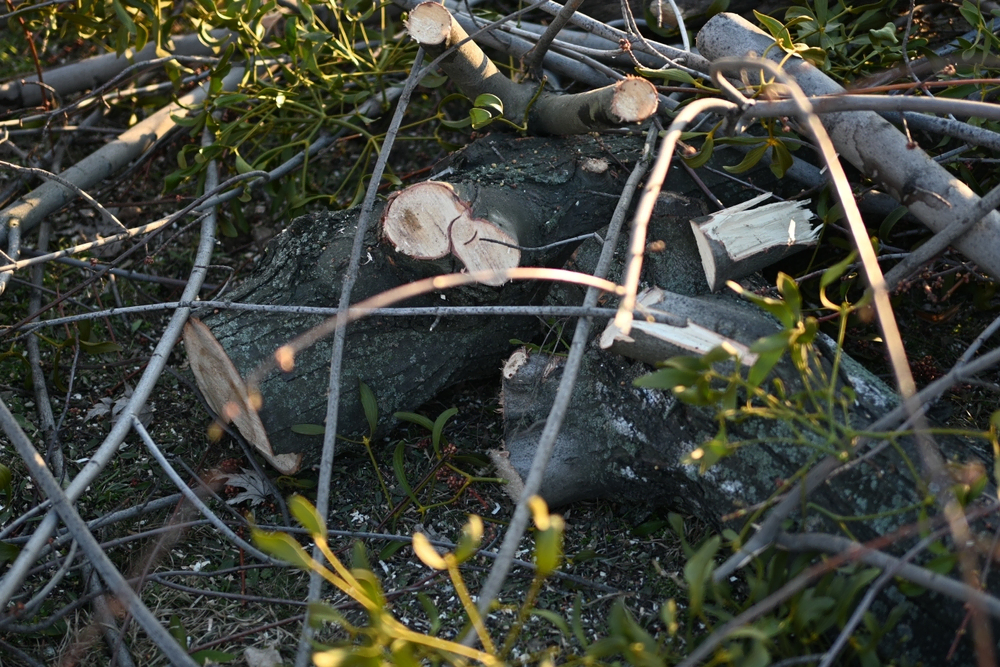
The third red flag is a split or cracked trunk. Sometimes a storm will crack a trunk without fully splitting the tree, leaving it standing but structurally compromised. These cracks aren’t always easy to spot — they can run vertically along the bark or appear as a gap at a branch union. A tree with a cracked trunk is unpredictable. The wound also becomes an entry point for decay fungi and insects, which accelerates the structural decline even if the tree survives the immediate damage.
The fourth red flag is significant crown loss. Losing one major limb in a storm is something a healthy, mature tree can often recover from, provided the wound is properly pruned back to the branch collar and monitored going forward. But when a tree has lost 50 percent or more of its canopy in a single storm, the calculus changes. That level of crown loss disrupts the tree’s ability to photosynthesize, stresses the root system, and often signals deeper structural damage. An ISA-certified arborist can assess whether what’s left is enough to sustain a healthy tree or whether the damage has crossed a threshold that makes removal the safer long-term call.
The fifth red flag is exposed or damaged roots. Roots that have been torn, severed, or lifted by a storm are a serious structural concern, especially in Nassau County’s coastal communities where salt air and storm surge already put chronic stress on root systems. Visible root damage doesn’t always mean a tree needs to come down immediately, but it does mean the tree’s stability has been compromised and needs professional evaluation before the next storm tests it again.
What Should You Actually Do Right After Storm Damage Hits Your Property?
The first thing to do is stay clear of anything that looks unstable. That sounds obvious, but the impulse to go assess the damage up close — especially when it’s your property and you want to understand what you’re dealing with — is strong. Resist it. Hanging branches, cracked trunks, and leaning trees are unpredictable. Give yourself distance.
The second thing to do is document everything before any cleanup begins. Walk the perimeter of the damage with your phone and take photos from multiple angles. Capture the full tree, the base, any visible cracks or splits, any hanging limbs, and any contact the tree or branches made with structures, fences, or vehicles. If you’re going to file a homeowners insurance claim — and in Nassau County, where a fallen tree often hits a covered structure, many homeowners can — this documentation is what your adjuster will need. Don’t skip this step in the rush to get things cleaned up.
After documentation, the question becomes what you can safely handle yourself versus what needs a professional. Clearing small branches from the ground, well away from the damaged tree, is generally fine. Anything that requires working at height, cutting branches under tension, or getting anywhere near a tree that’s leaning, cracked, or has hanging limbs in the canopy is not a DIY job. The physics of a damaged branch under tension are unpredictable, and the consequences of getting it wrong are serious.
One more thing worth knowing: if the storm has left branches in contact with or near power lines, don’t approach that area at all. Contact PSEG Long Island for utility line concerns before any tree work happens nearby. This is non-negotiable.
Storm Damage Cleanup Services in Nassau County, NY
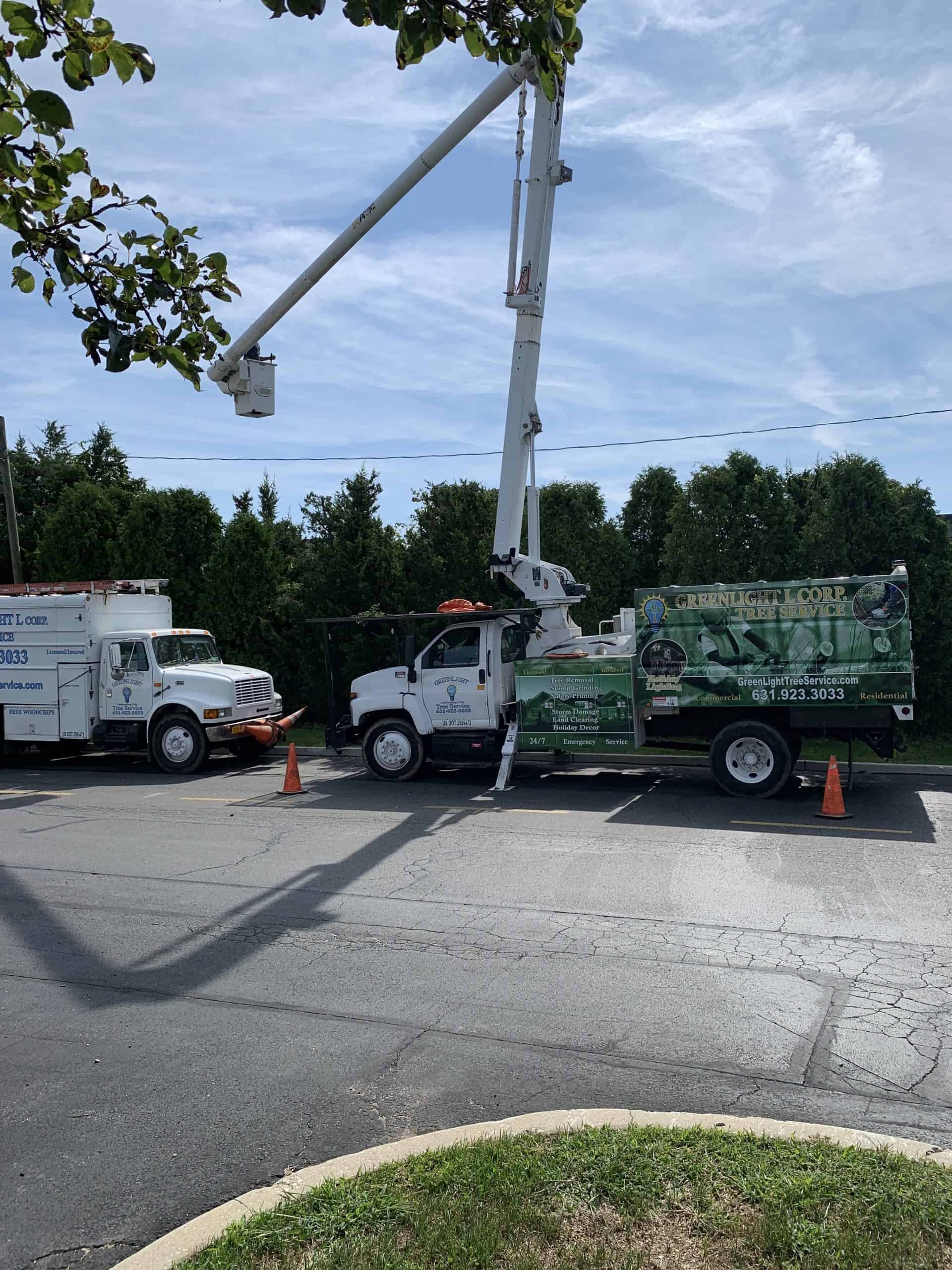
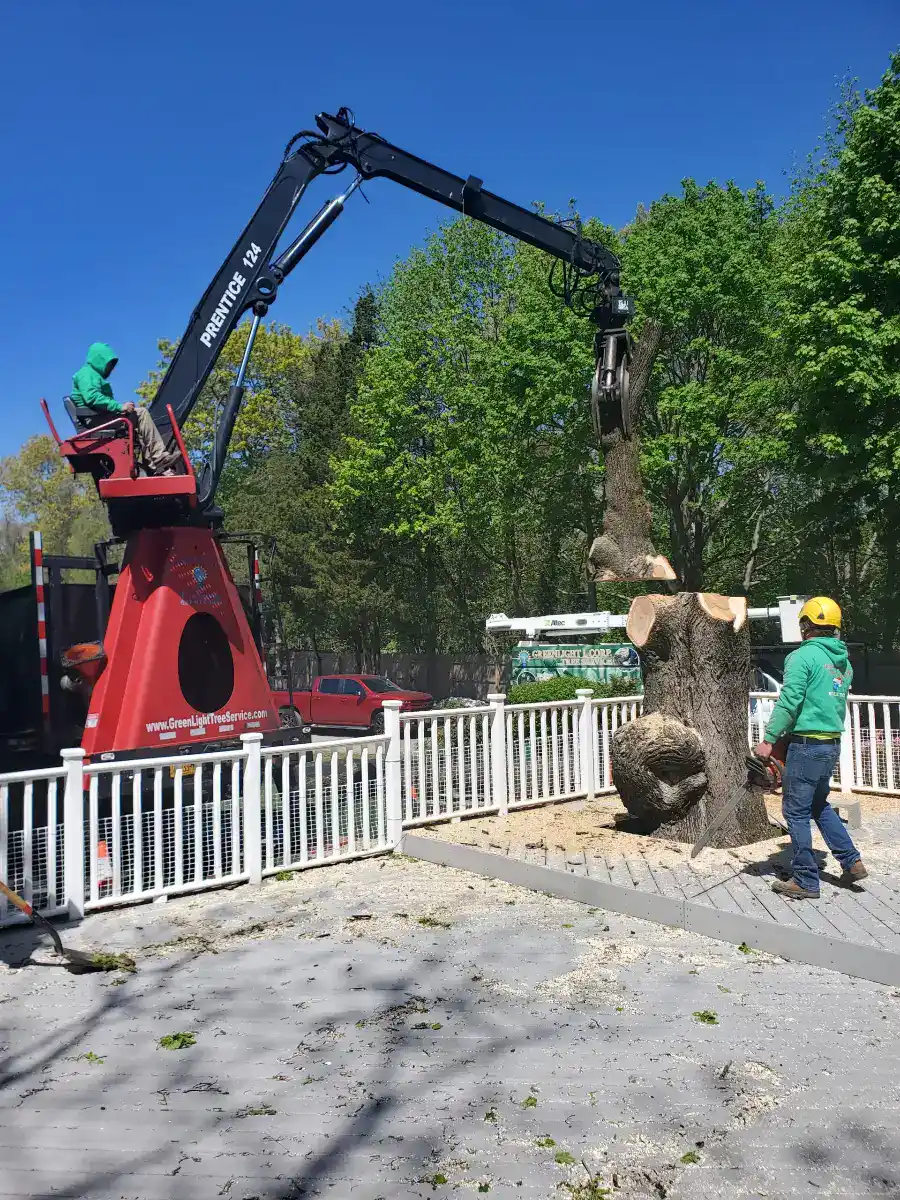
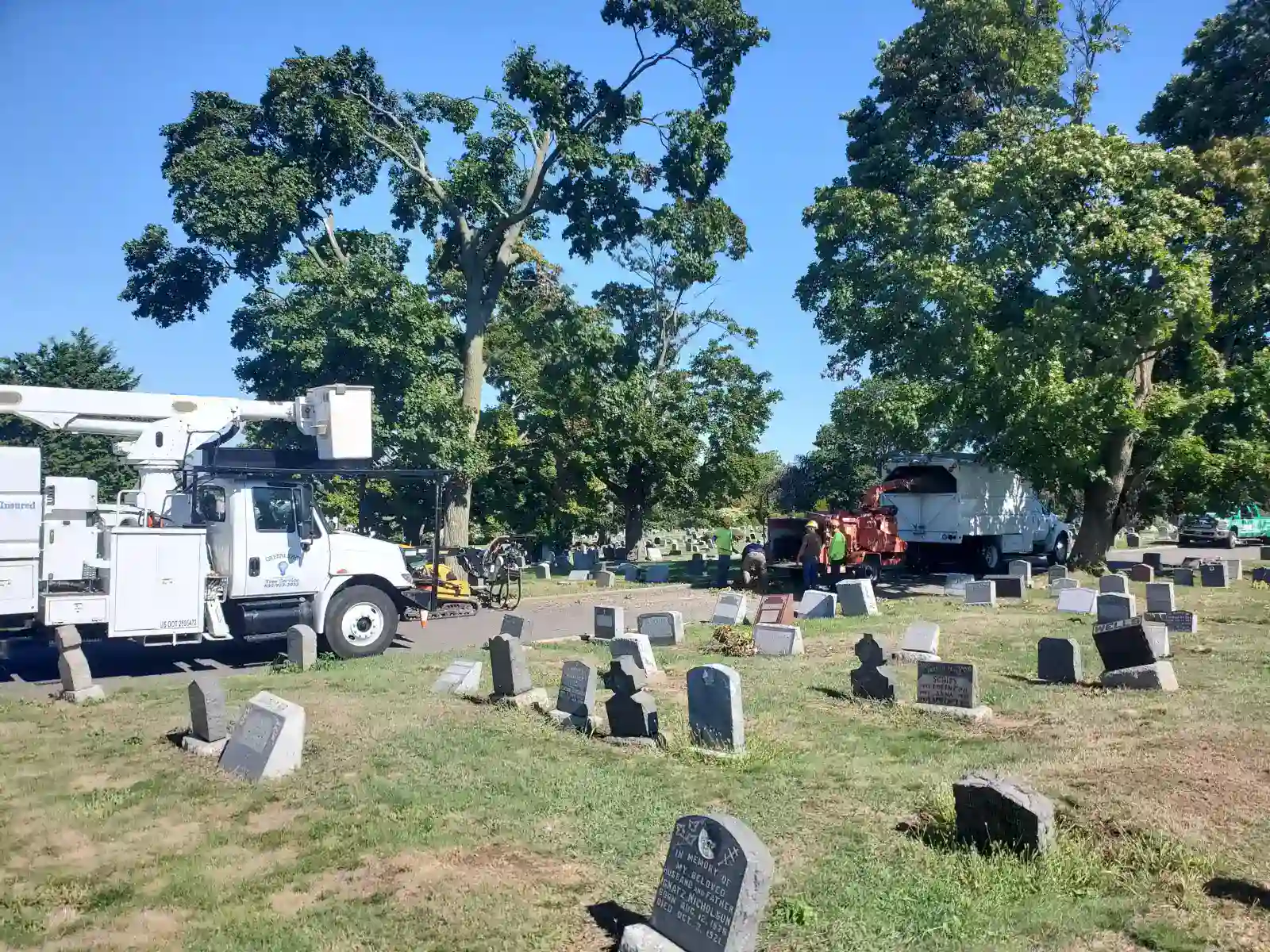
Once the immediate safety picture is clear, the next question is what professional storm damage cleanup actually looks like and what to expect when you call. After a major storm hits Long Island — the kind that leaves Nassau County communities from Long Beach to Oyster Bay dealing with downed trees and blocked driveways — every legitimate tree service in the area is fielding calls around the clock. Knowing what a quality response looks like helps you make a faster, better decision when you need to.
We’re available 24/7 for storm emergencies, and we triage calls based on safety risk. Trees threatening people or structures come first. We’ll give you a clear picture of what we’re looking at, what needs to happen, and what it’s going to cost — before any work starts.
Can a Storm-Damaged Tree Be Saved, or Does It Need to Come Down?
This is the question most homeowners actually want answered, and it’s one that almost no one in the local market takes the time to address honestly. The default assumption — from both homeowners and some tree services — is that storm damage means removal. That’s not always true, and it’s not the right starting point.
A tree that has lost one major limb but retains a healthy, structurally sound canopy and root system can often survive with proper corrective pruning. The key is making the right cut — back to the branch collar, not leaving a stub, not tearing the bark — and then monitoring the wound for signs of decay in the months that follow. Managed correctly, a storm-damaged tree can recover and continue providing the shade, privacy, and property value that mature trees add to Nassau County homes.
What changes the equation is the combination of factors. A tree that has lost more than half its crown, shows visible root heaving, has a cracked or split trunk, and is already showing signs of internal decay from previous wounds is a different situation entirely. At that point, the question isn’t whether the tree can survive — it’s whether it’s safe to leave it standing through another Long Island storm season.
That’s exactly the kind of judgment call that benefits from an ISA-certified arborist’s eyes. Our ISA Certified Arborist assesses storm-damaged trees with the training to distinguish cosmetic damage from structural compromise. That distinction matters enormously — both for your safety and for your budget. Removing a tree that could have been saved costs you money and a mature tree that took decades to grow. Leaving a tree that should come down costs you far more.
For Nassau County’s coastal communities — Long Beach, Nassau Shores, Island Park, Atlantic Beach — there’s an additional layer to consider. Salt air exposure puts chronic stress on trees that inland properties don’t face. A tree that looks structurally sound may have compromised root integrity from years of salt damage that only becomes apparent when a storm tests it. Post-storm assessment in these communities should always account for that baseline vulnerability.
How Does Insurance Work for Storm-Damaged Trees in Nassau County?
Insurance coverage for storm-damaged trees is one of the most misunderstood parts of the whole process, and the confusion costs Nassau County homeowners real money. Here’s the practical version.
Most standard HO-3 homeowners insurance policies — the most common type in New York — will cover the cost of removing a tree that has fallen and damaged a covered structure. That means if a tree falls on your house, your garage, your driveway, or your fence, you generally have a claim. What most policies won’t cover is removing a tree that fell in your yard but didn’t hit anything. The distinction matters, and it’s worth reviewing your specific policy language before you assume coverage goes either way.
What documentation you gather in the first hours after a storm directly affects how smoothly that claim process goes. Photos of the fallen tree, the point of impact, the structural damage, and the surrounding area give your adjuster the evidence they need to process the claim accurately. A professional damage assessment from an ISA-certified arborist carries weight with insurance companies in a way that a homeowner’s self-reported description doesn’t. It’s a specific, credentialed opinion about what happened and what it will cost to address.
We’ve worked with Nassau County homeowners navigating insurance claims after storms, and the consistent pattern is that the people who document thoroughly and get a professional assessment early have smoother, faster claim experiences than those who rush straight to cleanup. If you’re dealing with significant damage and you think there’s a claim to file, document first and call us — we can provide the kind of professional damage assessment that makes the insurance process easier, not harder.
One thing worth knowing: if there’s an active safety hazard — a hanging branch over a doorway, a leaning tree threatening a structure — you don’t have to wait for your insurer’s approval to address it. Emergency safety work can proceed. Just document everything before and after, and keep your receipts.
What Nassau County Homeowners Should Do After Every Storm
The storms that hit Long Island — from summer microbursts to the nor’easters that roll through between October and April — are a known quantity for anyone who’s lived here long enough. Sandy made that point permanently for a lot of Nassau County residents. The trees that look fine after a storm aren’t always fine, and the ones you’re most worried about aren’t always the most dangerous.
The five red flags covered here — sudden leaning, widow makers, trunk cracks, significant crown loss, and root damage — are your starting checklist after any significant weather event. Use it. Document what you see, stay clear of anything unstable, and get a professional assessment before the next storm does the deciding for you.
If you’re dealing with storm damage trees on your Nassau County property and you want a straight answer about what you’re looking at, we offer free estimates, 24/7 emergency availability, and a certified arborist who can tell you exactly what needs to happen and why.