Summary:
You need a tree removed, and the first question that hits you is probably the same one every Suffolk County homeowner asks: what’s this actually going to cost? The answer isn’t simple, and that’s not because companies are trying to hide anything. Tree removal pricing depends on variables that change from property to property—size, location, what’s nearby, and how complicated the job actually is.
Some removals run $300. Others push past $3,000. The difference comes down to specifics that matter more than you might think. Let’s walk through what drives these costs so you can go into estimates knowing what you’re actually paying for.
What Affects Tree Removal Cost in Suffolk County
Tree removal isn’t priced by a simple formula. Every job is different, and the final number reflects the actual work involved—not just cutting down a tree, but doing it safely without damaging your property, your neighbor’s fence, or the power lines running overhead.
Size matters, obviously. A 20-foot ornamental tree in your front yard is a completely different project than an 80-foot oak towering over your roof. But size is just the starting point. Where that tree sits, what’s around it, and whether it’s healthy or half-dead all factor into what you’ll pay.
Suffolk County adds its own complications. Coastal storms mean more emergency calls. Sandy soil and salt air stress trees in ways that don’t happen inland. And the density here—houses close together, utilities everywhere—means there’s less room for error.
Tree Size and Height: The Biggest Cost Driver
Height drives cost more than anything else. Taller trees take more time, require more equipment, and carry more risk. A crew can drop a small tree in a couple hours. An 80-foot giant might take a full day or more, especially if it needs to come down in sections.
Here’s what you’re looking at in Suffolk County for 2026. Small trees under 30 feet typically run $150 to $500. These are your ornamentals, young maples, smaller evergreens—trees that don’t require specialized equipment or extensive rigging.
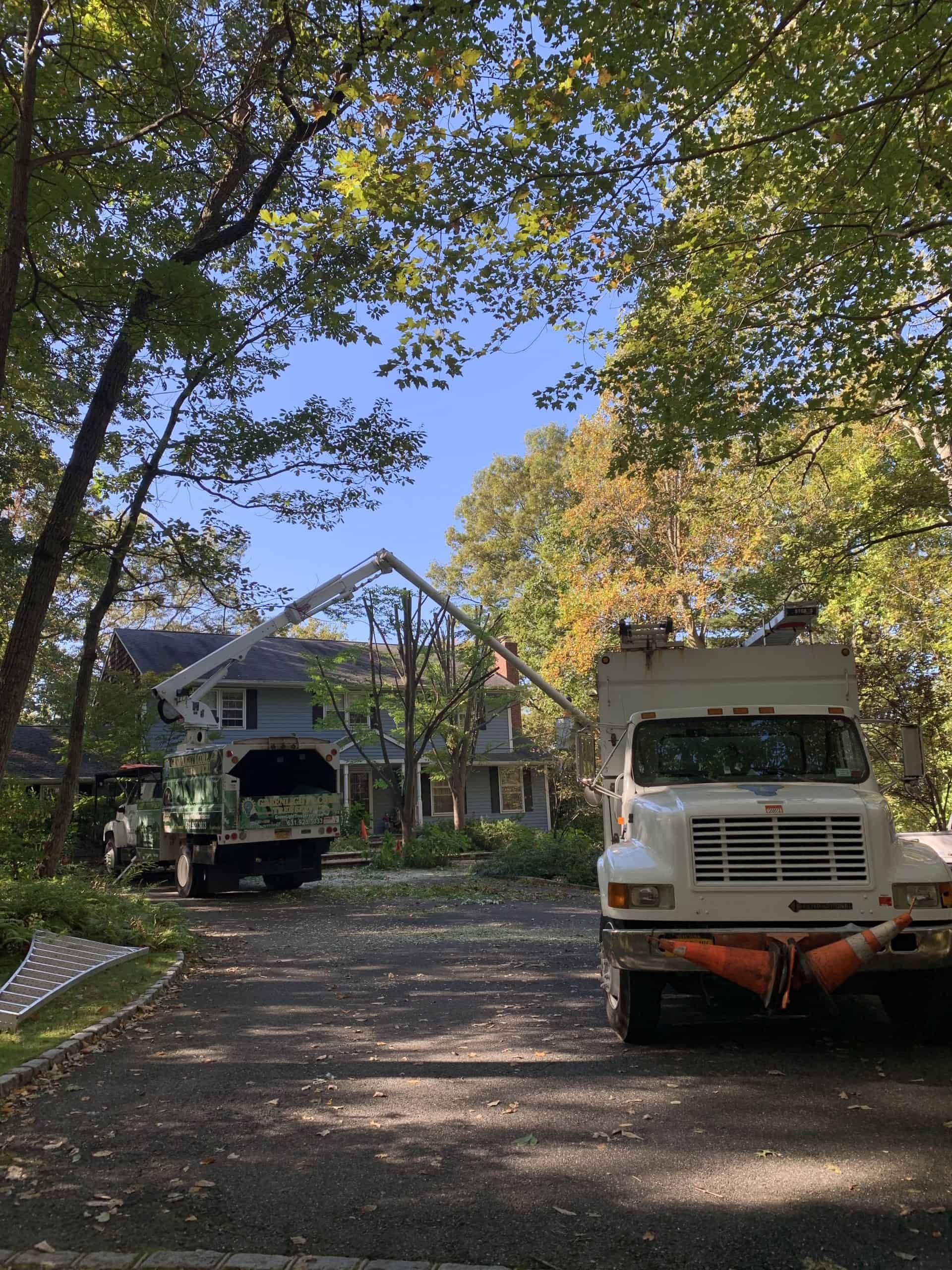
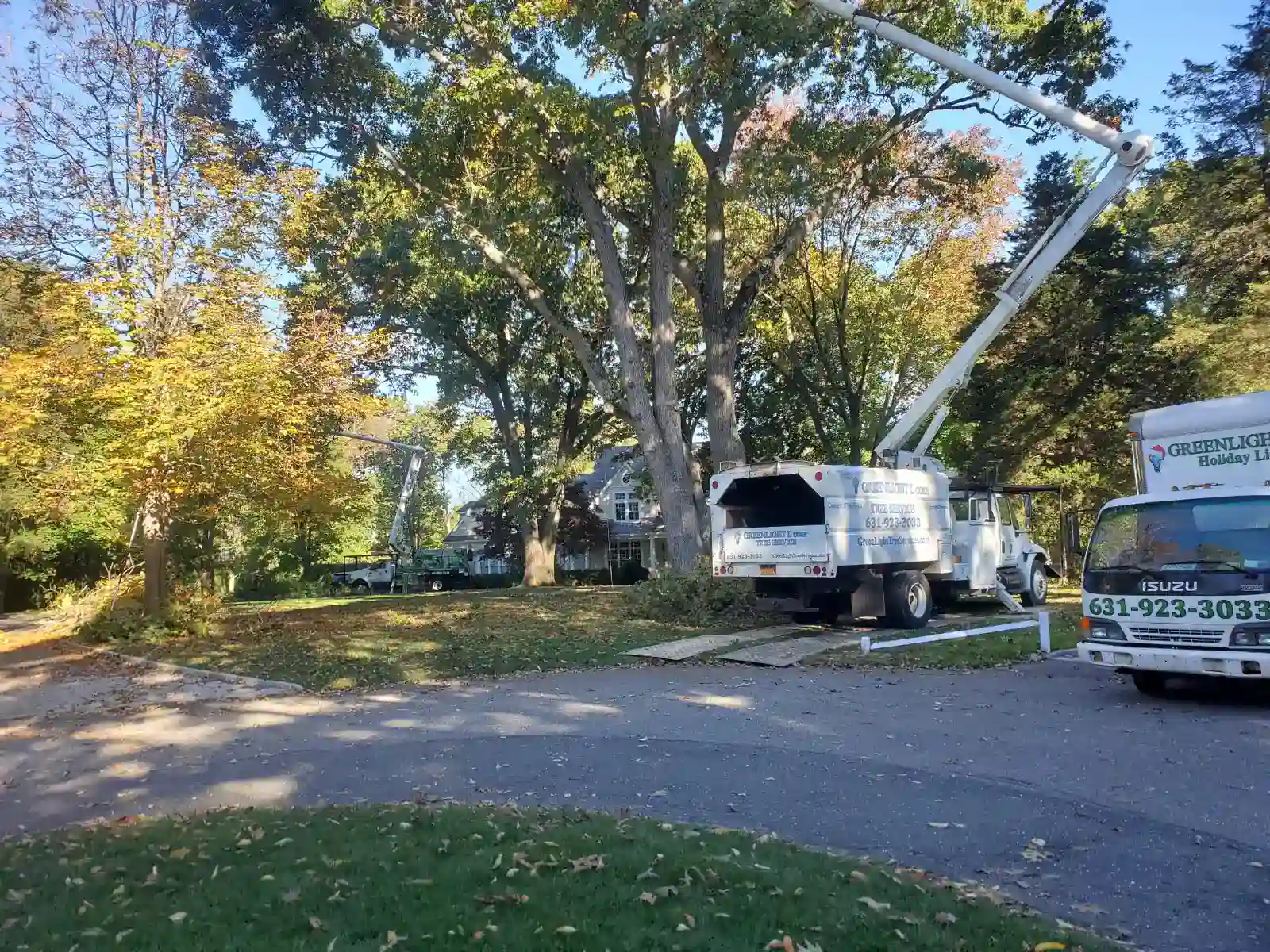
Medium trees between 30 and 60 feet cost $400 to $1,200. This is where most residential trees fall. Mature maples, oaks that haven’t reached full size, pines that have been growing for 20 years. The crew needs more time, possibly a bucket truck, and careful planning to avoid your house and landscaping.
Large trees from 60 to 80 feet jump to $800 to $1,500. Now you’re dealing with significant weight, extensive root systems, and branches that can cause serious damage if they fall wrong. The risk goes up, the equipment gets bigger, and the job takes longer.
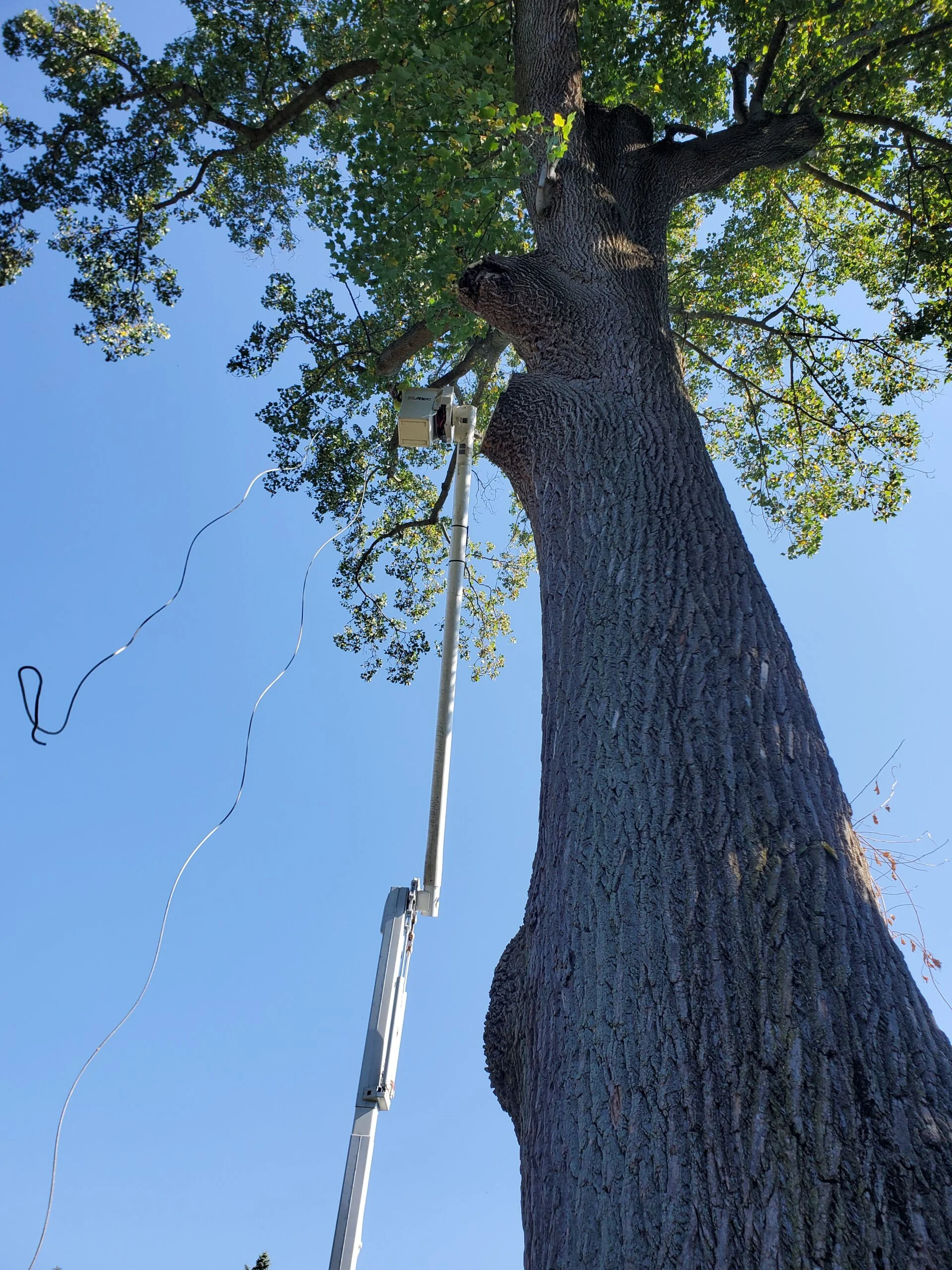
Trees over 80 feet can hit $1,500 to $3,000 or more. At this height, you’re often looking at crane rental, which alone adds $500 to the job. These are the massive oaks, the towering pines, the trees that have been growing for decades. Taking them down safely requires expertise and equipment that most homeowners never see.
But height isn’t the only dimension that matters. Trunk diameter factors in too. A tree with a 3-foot diameter trunk takes significantly longer to cut through than one that’s 12 inches across. More cutting means more labor hours, which means higher cost.
Multiple trunks complicate things further. Some trees split into two or three main stems, and each one needs individual attention. That adds time and complexity, which adds cost.
Location and Accessibility: Why Where Matters
A tree standing alone in an open yard is about as simple as removal gets. A tree wedged between your house and your neighbor’s fence, with power lines overhead and a deck underneath? That’s a different conversation entirely.
Location impacts cost because it determines how the crew has to work. If they can park the truck close, drop the tree in sections, and feed everything straight into the chipper, the job moves fast. If they’re hauling debris through a narrow side yard by hand because equipment can’t reach, every hour of labor adds up.
Proximity to structures is a major factor. Trees close to your house, garage, shed, or fence require careful sectional removal. The crew can’t just drop it and walk away—they need to lower each piece with ropes and rigging to avoid damage. That precision takes time and skill.
Power lines make everything more complicated and more expensive. If your tree is tangled with utility lines, the power company might need to get involved. Even if the lines are just nearby, we have to work around them with extreme caution. One mistake with a power line can be catastrophic, so this isn’t an area where anyone cuts corners.
Tight spaces cost more. If your tree is in the backyard with no direct access, the crew might need to use smaller equipment or even hand-carry pieces to the front. We bring in specialized compact equipment for these situations, but that comes at a premium.
Sloped or uneven ground adds difficulty and risk. Working on a hillside means dealing with gravity in ways that complicate every cut. Equipment might not be stable, footing is uncertain, and the tree could roll or slide unpredictably. All of that translates to higher cost.
Hard-to-reach properties sometimes require creative solutions. We’ve handled jobs where crews had to work from a neighboring property with permission, or where they needed to remove sections of fence to get equipment in. Every complication adds time and cost.
Tree Condition and Risk Factors
A healthy tree and a dying tree might look similar from the ground, but they’re completely different jobs. Tree condition affects both the difficulty of removal and the urgency of getting it done.
Dead or dying trees are actually more dangerous to remove than healthy ones. The wood is brittle, branches can break unexpectedly, and the whole structure is less predictable. Crews have to take extra precautions, which takes more time. Ironically, the tree that looks like it should be easier to deal with often costs more because of the added risk.
Leaning trees require special attention. A slight natural lean is one thing—some trees grow that way. But a tree that’s started leaning after a storm or because of root problems is actively unstable. We need to account for where it wants to fall versus where it should fall, and that requires careful rigging and sometimes additional equipment.
Storm Damage and Emergency Removal Costs
Emergency tree removal costs more. That’s not price gouging—it’s reality. When a tree falls on your house during a nor’easter, we drop everything else to help you. We’re working in dangerous conditions, often after hours or on weekends, dealing with trees that are already compromised and unpredictable.
Emergency removal can run 2 to 3 times the cost of scheduled work. A tree that would normally cost $1,000 to remove might hit $2,000 or more in an emergency situation. After major storms, when every tree service in Suffolk County is slammed with calls, prices go up further because demand far exceeds supply.
Here’s what emergency pricing typically looks like. Small trees under 30 feet jump from $150-$500 to $300-$800. Medium trees go from $450-$1,200 to $800-$1,800. Large trees increase from $800-$1,500 to $1,500-$3,000. Extra-large trees can hit $2,000 to $5,000 in urgent situations.
The good news is insurance might cover it—but only if the tree damaged a covered structure. If a storm knocked a tree onto your house, garage, or fence, your homeowners insurance typically pays for both the structural repairs and the tree removal, minus your deductible. But if the tree just fell in your yard without hitting anything, you’re paying out of pocket even if it was storm-related.
There’s a strategy here for Suffolk County homeowners. If you’ve got a tree that’s concerning you—leaning more than it used to, lots of dead branches, visible decay—getting it removed before storm season hits saves you money. Scheduled removal during off-peak times costs less than emergency work during a nor’easter.
Late fall and winter are typically slower seasons for tree work, and we often offer better rates when we’re not swamped with emergency calls. Planning ahead protects both your property and your budget.
Additional Services That Impact Your Total Cost
The quoted price for tree removal usually covers cutting down the tree and hauling away the trunk and major branches. But there are add-ons that can increase your total, and it’s worth knowing what’s included versus what costs extra.
Stump grinding is separate from tree removal at most companies. After the tree is down, you’re left with a stump that’s anywhere from a few inches to several feet across. Grinding it removes the visible portion and grinds it 8 to 12 inches below ground level so you can plant grass or landscape over it. Stump grinding typically adds $100 to $450 depending on the stump’s size and location.
Full stump removal—digging out the entire root ball—costs significantly more than grinding. Most homeowners opt for grinding unless they’re planning construction in that exact spot or need the roots completely gone for replanting.
Debris removal and cleanup are usually included, but it’s worth confirming. We haul away all the wood, branches, and debris, leaving your property clean. We can also leave the wood if you want it for firewood, which can actually reduce your cost slightly since we don’t have to dispose of it.
Permit handling is a service we offer. Suffolk County municipalities have varying tree removal regulations, and removing certain trees without a permit can result in fines up to $10,000. We’re familiar with local requirements and can often handle the permit application for you, typically charging around $250 for that service. Permit fees themselves range from $25 for residential properties to $150 for commercial ones.
Log splitting or wood chipping are optional services if you want the wood processed for use. Some homeowners like to keep wood chips for mulch or have logs split for firewood. These services typically add $150 to $250 but can be worth it if you’ll actually use the material.
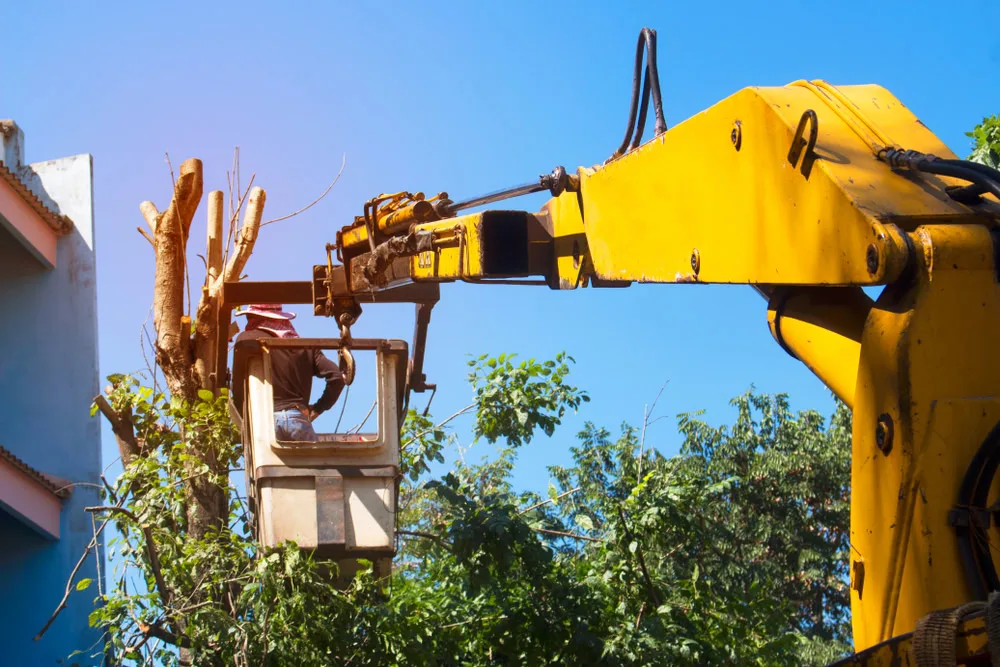
Crane rental becomes necessary for trees over 80 feet or in extremely tight locations where conventional equipment can’t safely do the job. Crane rental adds roughly $500 to your total, including the truck rental and the additional crew needed to operate it safely. It sounds expensive until you consider the alternative—trying to remove a massive tree without proper equipment and risking catastrophic property damage.
Planning Your Tree Removal Project in Suffolk County
Tree removal cost in Suffolk County comes down to the specifics of your situation—the size of your tree, where it sits on your property, what’s around it, and whether you’re dealing with an emergency or planning ahead. Understanding these factors helps you budget accurately and evaluate quotes from different companies.
The range is wide—$300 to $3,000 or more—but now you know why. A small ornamental tree in an open yard sits at one end. An 80-foot oak next to your house with power lines overhead sits at the other. Most residential jobs fall somewhere in the middle, typically between $800 and $1,500 for a mature tree that requires professional equipment and careful planning.
Getting multiple quotes makes sense, but compare what’s actually included. The lowest number isn’t always the best deal if it doesn’t include cleanup, debris removal, or proper insurance coverage. When you’re ready to move forward with tree removal in Suffolk County, we provide transparent pricing, certified arborists who understand local conditions, and the equipment to handle jobs safely regardless of size or complexity.